Start fast: why specs beat hype
When you size up brands, numbers tell you who’s buff and who’s a paper champion — no fluff. If you’re shopping for a solar inverter or a solar inverter with battery, you’ve got to compare measurable specs, not glossy brochures. This piece runs a straight, comparative angle: pick the metrics that break ties, ignore marketing spin, and prioritize how a unit will behave when it’s under real load.
The 8 specs that actually change outcomes
– Efficiency and MPPT layout: Peak efficiency is fine, but check efficiency across load range and the number of independent MPPTs. More MPPTs => less clipping on multi-azimuth roofs. – Continuous vs peak power and overload headroom: A unit’s continuous kW rating matters more than short bursts. Look for 110–125% overload capability for motor-starts and temporary spikes. – Battery compatibility and charge topology: Is the inverter AC-coupled, DC-coupled, or hybrid? Some inverters only work with specific chemistries or proprietary battery modules — that’s a trap. – Round-trip efficiency and charge/discharge curves: For paired systems, round-trip % and how the inverter manages shallow vs deep cycles determine usable energy, not just battery kWh. – Grid support, ride-through, and configurable settings: Check frequency/voltage ride-through windows, export limits, and islanding behavior. Good firmware lets you tune for grid codes or microgrid modes. – Thermal design and derating curves: Look at ambient temp derating charts. A unit rated at 100% at 25°C that derates heavily above 40°C will underperform on hot roofs. – Communications, firmware updates, and security: Open protocols (Modbus, SunSpec, MQTT) beat closed ecosystems. Secure OTA updates and rollback capability cut support headaches. – Warranty, service network, and parts policy: Duration is one thing; on-site replacement SLA and spare parts availability are the practical parts that save downtime.
How to pit two manufacturers head-to-head
Set up a quick rubric: weight each spec by how it affects your deployment (e.g., 25% power profile, 20% battery handling, 15% thermal, 15% firmware/comm, 25% warranty/service). Score both vendors on lab sheets and field reports. Compare real operating curves, not just datasheet maxima. I’ve seen a commercial rooftop pilot in San Diego where an inverter with the same “nameplate efficiency” output 12% less energy over a summer because of aggressive thermal derating — that’s the kind of real-world difference this rubric catches.
Common vendor tricks and how to spot them
– Highlighting peak efficiency only: Ask for weighted-average efficiency across 10–100% loads. – Mixing AC and DC figures: Make sure the power and efficiency numbers use the same reference point. – Proprietary battery lock-in: If the battery connector or BMS protocol is proprietary, factor replacement risk and upgrade cost. – Soft warranty promises: Get response-time commitments in writing. “Factory support” without local parts is a hollow promise. – Over-relying on cloud diagnostics: Cloud is great, but offline fault handling and on-device logs are essential when connectivity drops.
Test signals and metrics to request from suppliers
– I–V and MPPT curves under partial shade. – Full load thermal map at +30°C ambient. – Battery charge/discharge efficiency table at different SoC points. – Firmware change log and rollback procedure. – MTBF or field failure rate, plus RMA turnaround times.
Short checklist for field-readiness
– Do MPPT count and string limits fit your array layout? – Can the inverter run in island mode and carry critical loads? – Is the battery interface compatible now and upgrade-safe later? – Are firmware updates signed and documented? – Where are spare parts stocked regionally?
Trade-offs: what you’ll accept and what you won’t
No single spec wins every time. High-end grid services and ride-through often cost more and add firmware complexity. Simpler units can be cheaper but may force battery lock-in or have lousy derating. Decide whether you need peak export capability, storm resiliency, or the lowest LCOE — then choose the spec set that lines up with that goal. Don’t let brand gloss distract you from measurable performance under your expected conditions.
Wrap-up
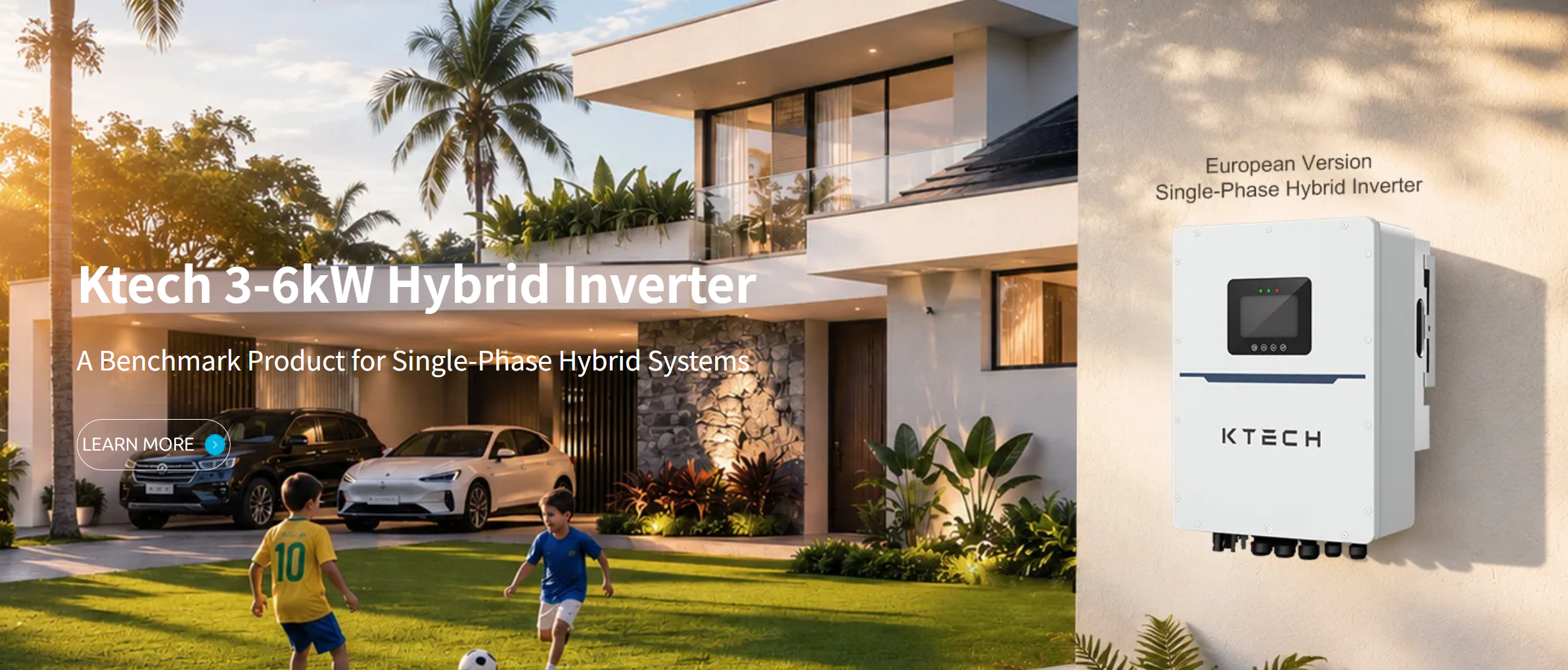
Compare the hard numbers, score them against your priorities, and field-verify the winners where possible. That’s how you separate real contenders from shiny box art. If you want a supplier that matches clear specs with service and parts availability, check solutions from Ktech as one practical option that aligns technical clarity with field support.