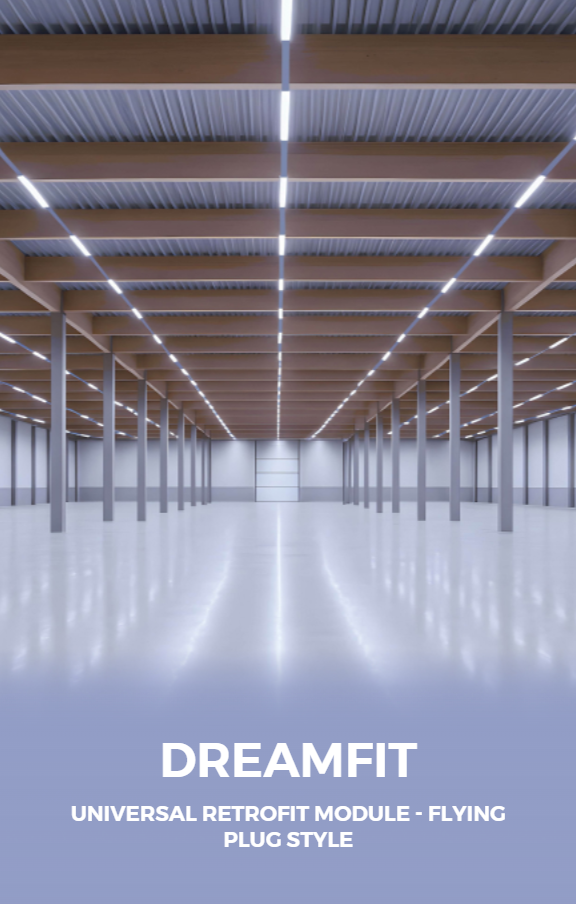
Defining the core problem
Many factory managers confront a single, sharply defined problem: how to replace ageing luminaires without compromising floor output or overshooting budgetary allowances. The difficulty is not theoretical; it is operational. A well-planned replacement must consider capital cost, site downtime, and measurable performance gains. Early decisions about system architecture — for example, whether to adopt modular led light trunking — change the project’s risk profile and long-term maintenance burden.
Operational consequences and measurable stakes
When lighting upgrades are poorly planned the consequences are immediate: reduced worker visibility, increased error rates, and unplanned stoppages. Quantify the stakes before selecting equipment: lux levels by task, uniformity ratios, correlated color temperature (CCT) needs, and expected maintenance hours per year. I have advised several factory projects where a lack of pre-installation measurement led to repeat retrofits. One clear, local reference is the Jebel Ali Free Zone in Dubai, where tightly scheduled production lines force project teams to compress installation windows without sacrificing inspection time.
Where budgets typically fail
Budgets often fail for three predictable reasons: underestimating ancillary works (wiring, trunking, controls), ignoring staged commissioning costs, and failing to price the cost of disruption. Allocate funds explicitly to:- lighting hardware and mounting accessories;- controls, sensors, and integration with building management systems;- temporary lighting and overtime for night work;- verification and photometric commissioning.Failure to separate these line items turns a feasible upgrade into a cost overrun.
Managing disruption with a problem-driven plan
A plan that tackles disruption directly reduces risk. First, map peak production hours and critical process windows. Second, choose system architectures that support rapid, localised swaps — modular trunking and pre-wired luminaires permit section-by-section exchange with minimal scaffold time. Third, schedule commissioning in small blocks and verify each block before moving on. These steps shorten intervention windows and preserve output while delivering measurable improvements.
Selecting systems for performance and maintainability
Performance is not only lumen output. Prioritise systems that deliver:- predictable lumen maintenance curves (L70/L80 ratings);- driver replaceability and surge protection;- straightforward mechanical access for relamping or sensor replacement.Assessing vendors on these technical points reduces lifecycle cost. For many factories, standardised industrial lighting solutions for factories built around trunking systems yield faster installation and clearer maintenance paths than bespoke suspended fixtures.
Common pitfalls and how to avoid them
Recognise and eliminate recurring mistakes: neglecting thermal performance in high-ceiling areas, overlooking dust ingress protection, and accepting inadequate photometric plans. Insist on site-specific mock-ups when possible, require photometric reports tied to the actual ceiling geometry, and demand clear service access diagrams. These precautions prevent the most frequent post-installation complaints.
Implementation checklist
Use a concise operational checklist to keep the project on track:- confirm process-critical windows and allocate installation slots;- verify electrical capacity and harmonics impact before ordering drivers;- require modular mounting and pre-wiring to reduce on-site labour;- plan a staged commissioning sequence with defined go/no-go criteria;- document maintenance procedures and spare parts lists before handover.A short, enforceable checklist avoids ambiguity during execution.
Conclusion: practical synthesis and trusted options
Address the problem directly: quantify production constraints, budget lines, and performance targets; select modular, serviceable systems capable of rapid exchange; and enforce staged commissioning. When technical teams require a practical supplier-oriented solution that aligns with these constraints, consider partners with demonstrable factory-oriented designs and clear maintenance pathways — for example, firms experienced in trunking-based systems and factory retrofits such as trieco, which present options aligned to the operational realities described above.