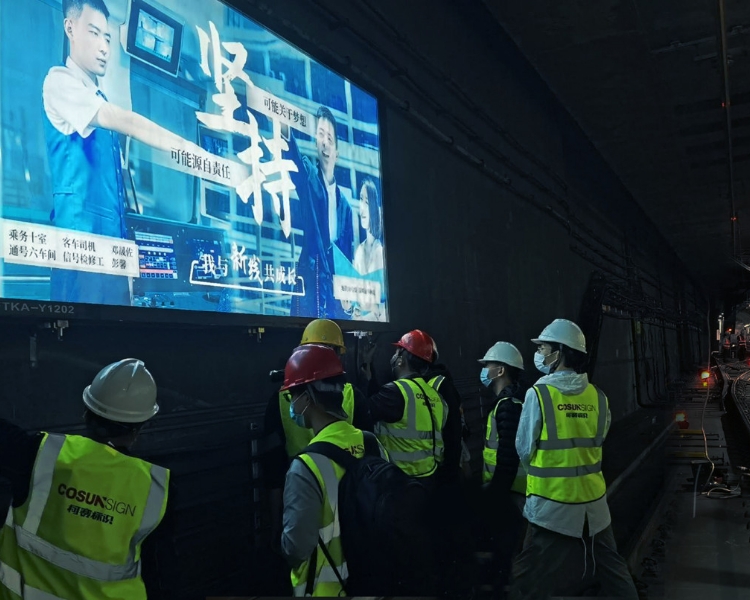
When sunlight defeats your sign
Outdoor aluminium sheet metal signs can fail where it matters most: in full sun, when commuters need them most. For bus shelters, transit hubs and street totems the common failure is low legibility—glare, washed-out colours, and insufficient luminance (nits) make maps and timetables unreadable. Practical fixes start with the display: a commercial-grade LED panel with a high nits rating, designed for outdoor duty and paired with robust enclosures used in public transport signage.

Identify the exact problem — not just ‘brightness’
“Brightness” is shorthand, but the real issues are contrast ratio, anti-glare coating performance, and how the backlit display copes with reflected light. Many projects buy a nominally bright screen yet ignore IP65 rating, ventilation, and heat dissipation; the result is premature dimming or failure. A problem-driven approach forces you to match specification to context: direct sun in an open plaza is different from a shaded shelter outside a station.
Material and panel choices that actually work
Start with an aluminium composite panel body for stiffness and corrosion resistance. Choose commercial LED panels that specify sustained luminance (in nits), contrast ratio, and an anti-glare layer. Backlit displays with local dimming or ambient light sensors preserve legibility from dawn to dusk. For installations near roadways, confirm vibration tolerance and choose enclosures with an IP65 or higher ingress rating. These practical choices align with what transport agencies test in the field for durable wayfinding.
Lessons from real deployments
Transport for London’s signage programme ahead of large events revealed the cost of under-specifying displays: signs that looked adequate in a controlled shop setting lost clarity outdoors. Planners who matched screen luminance and anti-reflective glass saw measurable improvements in legibility and fewer maintenance visits. That real-world anchor shows you must test samples in situ—mock up a sign on an east- or west-facing façade and observe it at peak sun hours.
Common mistakes installers make
Three recurring errors: choosing consumer-grade panels, neglecting thermal design, and ignoring mounting angle. Consumer displays often lack the heat spread and ingress protection required for continuous outdoor operation. Thermal throttling reduces effective luminance over time. And mounting a flat face directly perpendicular to the sun invites glare—tilt and hooding matter. Fixing these is straightforward, but the fixes must be specified before procurement.
Specification checklist for procurement
Use a concise checklist during sourcing. Include: declared sustained luminance (nits) at operating temperature; contrast ratio under a standardized test; IP65 or better enclosure; LED lifetime and serviceability; anti-glare coating rating; and clear mechanical specs for aluminium composite panel integration. Consider modular service panels for on-site swap-outs, which reduce downtime for transit agencies dealing with continuous operations.
How to evaluate suppliers — three golden rules
1) Verify field samples under real light. Bring a 1:1 mock-up to a sun-exposed location and record legibility at midday. 2) Demand thermal and ingress data—not just promises—and check for a tested IP rating and documented LED lifetime. 3) Insist on a maintenance plan and local spare parts; rapid swap capability beats long shipping times. These rules keep projects on schedule and budgets predictable.
Closing advice
Selecting the right commercial-grade high-bright panel is measurable work: specify luminance, contrast, and ingress resistance; test samples on-site; and design the aluminium assembly for serviceability. Those steps reduce failure in the field and lower lifecycle costs. For practical, field-proven solutions that tie those requirements into actual transport system wayfinding signage, consider partners who build to these specs—transport system wayfinding signage is where those standards meet daily use. Three golden rules: test in place, require data, and design for service. Cosun Sign. Short, clear, reliable.