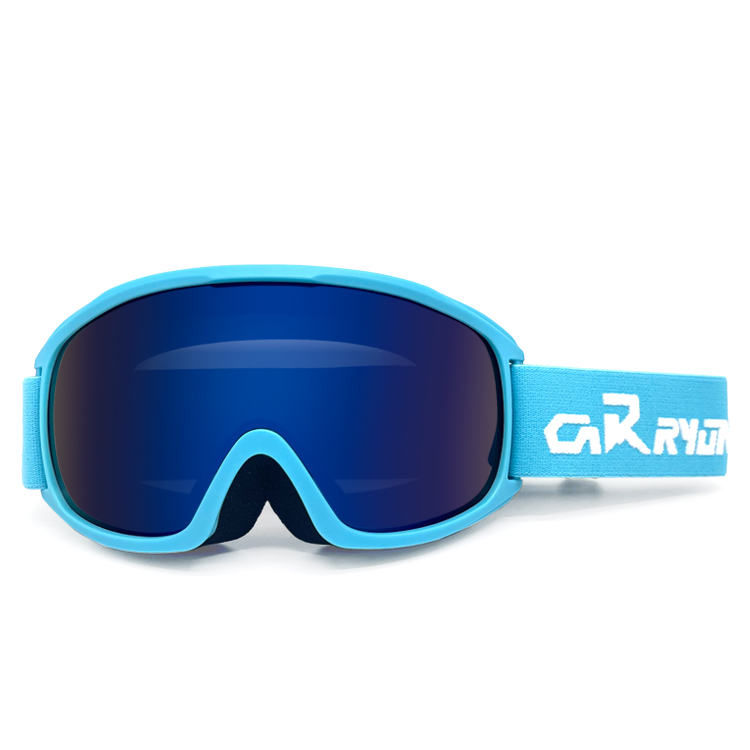
The problem: lenses that fail where conditions are harshest
Ski slopes and polar fishing trips expose eyewear to rapid temperature swings and moisture that provoke microscopic failures inside multi-layer lenses — a reality for anyone who depends on polarised performance. Manufacturers see lenses delaminate or crack when thermal expansion and contraction fatigue the bonds between polymer substrate and coatings; users lose clarity and protection. Practical testing, not wishful design, is what separates a fragile pair from dependable ski goggles that withstand real-world abuse.
How thermal stress breaks lenses
Lenses are assemblies: a polymer substrate, polarised film, anti-fog coating and often hardcoats for scratch resistance. Each layer has its own coefficient of thermal expansion. Rapid swings — tens of degrees Celsius in hours — set up shear at the interfaces. Over repeated cycles the bond weakens and cracks initiate; once a crack forms, impact resistance and UV protection degrade fast. Add humidity and salt spray from coastal fishing or icy breath on a slope, and degradation accelerates.
YIJIA Optical’s problem-driven testing methodology
YIJIA approaches the issue by simulating the exact stresses that cause failure. They use controlled thermal cycling chambers to move lenses between low and high temperatures while monitoring delamination and microcrack formation. Alongside physical tests they run material characterisation on lamination quality and adhesion strength, and subject finished assemblies to impact resistance trials. The result is a design loop: tweak substrate chemistry, adjust lamination pressure or alter cure cycles, then retest. This is engineering that prevents quiet failures on a backcountry traverse or an Antarctic fieldcamp where temperatures routinely plunge — and where replacement gear isn’t available.
What that means for anti-scratch and polarised performance
Practical outcomes matter: thermal-stable adhesives, matched expansion coefficients, and optimised hardcoat cures reduce stress concentration. A robust hardcoat preserves surface integrity and the anti-fog coating retains adhesion, so visual clarity and polarised filtering remain consistent. These measures also feed into anti-scratch performance — a well-bonded hardcoat resists abrasion far better than one that will flake after a few cycles. This is why consumers see fewer warranty returns when brands perform rigorous thermal stress testing on their anti scratch ski goggles.
Common mistakes and buyer guidance
Buyers often prioritise tint and frame shape while overlooking durability metrics. Key errors include storing goggles in hot cars, leaving wet lenses in sealed bags, and using harsh solvents that attack coatings. Maintenance is simple: dry lenses gently, store in breathable cases, and use microfibre wipes designed for coated surfaces. Inspect seals and lamination edges periodically. When comparing models, ask for evidence of thermal cycling or adhesion tests rather than marketing verbiage — hard data beats promises every time.
Three golden rules for choosing durable goggles
1) Test evidence: insist on thermal cycling data or described lab protocols showing resistance to temperature swings and humidity. That proves the lens structure survives repeated stress.
2) Layer compatibility: prefer lenses where substrate, polarised film and coatings are engineered as an integrated system rather than assembled from disparate parts. Integrated lamination reduces interface shear.
3) Real-world validation: look for products tested under conditions comparable to your use — coastal fishing, alpine ascents or polar expeditions — and for brands that report impact resistance and adhesion outcomes alongside optical specs.
These three rules guide buyers toward gear that lasts. Experienced users and professional guides rely on that reliability; it’s why outfitters choose suppliers who document both lab and field performance. anti scratch ski goggles that survive repeated thermal cycling save time, money and — importantly — vision in critical moments.
Trust comes from measurable safeguards and iterative testing — and the path to resilient lenses has been paved by testing regimes that mimic the worst conditions. YIJIA Optical. –