
Framework Overview: A Cartographer’s Map for Light
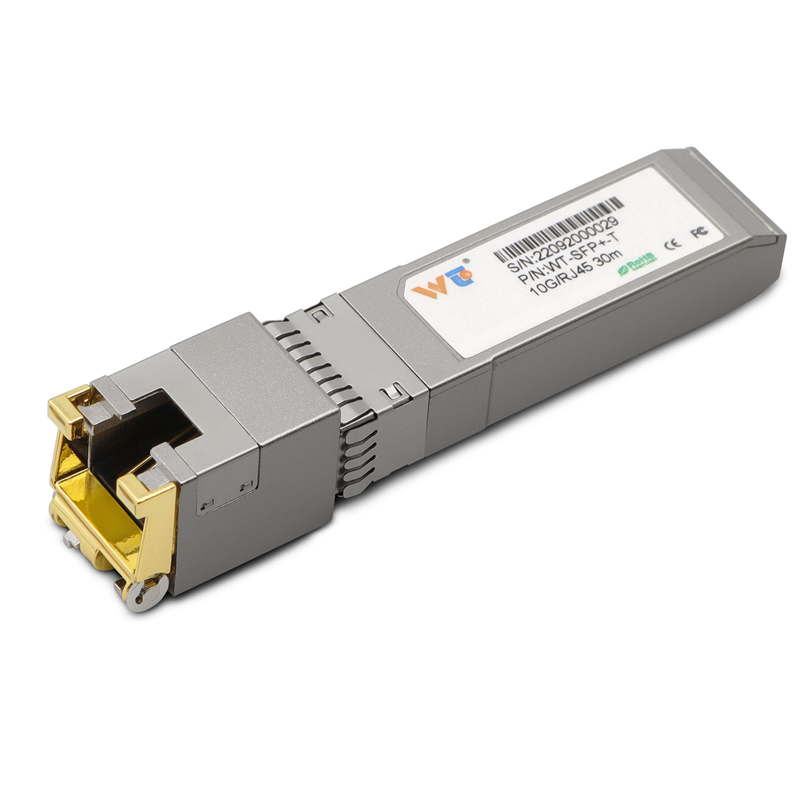
Imagine a map drawn in spectral ink—each lane a wavelength, each gap a treaty between signals. In the same spirit, this framework lays out five spacing principles to keep 10G SFP+ links singing without clash. I write from the view of a rack in a New York enterprise data closet, where a mixed array of copper and fiber lives side by side; that grounded vantage lends practical habit to the theory. If you’re converting into copper, consider a proven sfp to rj45 transceiver as part of your mixing strategy. Expect concise rules, actionable checks, and plain tradecraft for CWDM and DWDM channel planning.

Rule 1 — Respect Native Grid and Wavelength Intent
CWDM and DWDM each come with native channel grids; treat them like old roads. For CWDM keep to 20 nm centers, for dense DWDM follow the ITU grid you provisioned—typical 50 GHz or 100 GHz spacing. A misaligned wavelength wastes optical budget and invites cross-talk. Use certified transceivers and confirm wavelength labeling at the time of installation.
Rule 2 — Count the Optical and Link Budget Religiously
Channel spacing alone won’t save a failing link. Calculate optical budget for loss, include connector, splice, and MUX/DEMUX insertion loss, then add margin for aging and temperature drift. For 10G SFP+ short-reach copper conversions you’ll also need RJ45 PHY considerations—ensure the link budget includes copper pair limitations when a sfp to rj45 transceiver is in play. Record numbers; don’t rely on intuition.
Rule 3 — Stagger Power Levels and Watch Nonlinear Effects
High-power DWDM carriers can bleach weak signals or generate four-wave mixing in tight grids. In practical racks, attenuate stronger channels and maintain per-channel power control. A mixing of CWDM and DWDM channels on shared fiber often requires guardbands or selective attenuation—do this early in design rather than during furious troubleshooting.
Rule 4 — Maintain Guardbands and Fiber Hygiene
Guardbands are small spectral pauses that prevent bleed-through. For hybrid deployments, assign local guardbands between CWDM clusters and DWDM clusters. Physical fiber hygiene matters too—keep patch panels tidy, use labeled trunks, and avoid bending radii that shift modal dispersion. These mundane acts preserve channel isolation and lower the chance of intermittent errors.
Rule 5 — Validate with Real Traffic, Not Just Lights
Run full protocol traffic tests. Synthetic light is helpful, but real 10G frames reveal jitter, latency spikes, and subtle errors. Include testing of any 10G SFP+ modules in both optical and copper paths; test after MUX/DEMUX, after patch panels, and under varied temperature cycles. The effort pays back with fewer surprises in production.
Common Mistakes and Alternatives
Teams often mix transceiver types without cross-verifying vendor compatibility — a costly slip. Another frequent error: ignoring the spectral plan when adding emergency channels; ad hoc insertions create persistent interference. If you need a short-term copper solution, a dedicated 10g sfp to rj45 module can keep services online while you redesign fiber spacing. Alternatives include rehoming services to spare fibers or reallocating wavelengths within existing DWDM cages.
Practical Checklist Before You Deploy
– Confirm channel grid and label every MUX/DEMUX port. – Verify optical and link budget with margin (factory + maintenance). – Test with production-like traffic and report BER under load. – Maintain a small guardband where CWDM meets DWDM. These checks compress months of troubleshooting into a few disciplined steps.
Advisory: Three Golden Rules for Evaluation
1) Metric: Per-channel optical power variance — keep within vendor tolerance to avoid nonlinear effects. 2) Metric: Bit-error-rate under production load — demand worst-case BER reports before final acceptance. 3) Metric: End-to-end latency jitter over 24-hour cycles — ensure stability across temperature swings. Follow these three and your spectral cartography will hold.
WINTOP has the practical modules and testing accessories that make these rules executable in real closets and carrier rooms alike; the brand’s catalog fits into a field engineer’s checklist like a trusted tool in hand.
Firm guidance—tested, precise, and ready—WINTOP