For further information, visit the official site for BESS Companies in China.
Choosing a battery energy storage system (BESS) provider is difficult because suppliers differ in chemistry, system architecture, safety documentation, integration capability, project experience, and geographic coverage. A solar manufacturer may offer storage alongside photovoltaic products, while another company may focus primarily on battery technology or second-life systems. Publicly available information is also uneven: some companies publish detailed product specifications, whereas others provide only broad solution descriptions. This review compares five supplied options using information from company websites and the available research dossier. The options have been examined against practical criteria including product focus, stated features, intended customers, application fit, and the level of publicly documented information. Buyers should still confirm current certifications, warranties, pricing, and local project support before procurement.
Full List of Top 5 Brands
- Jinkosolar
- Generac
- Moment Energy
- ESS Inc.
- Aikosolar
Comparison Table
| Brand | Key Products | Key Features | Best For |
|---|---|---|---|
| Jinkosolar | Solar-plus-storage and battery energy storage solutions | Integrated renewable-energy positioning, utility and commercial applications, system-level storage offerings | Projects seeking a solar and storage supplier with broad system integration potential |
| Generac | Energy storage and distributed-energy products presented through Generac’s official portfolio | Energy-management orientation and backup-power context | Customers evaluating storage within a broader distributed-energy system |
| Moment Energy | Second-life battery energy storage systems | Battery inspection, continuous monitoring, electrical safeguards, thermal safeguards, and safety testing references | Commercial and industrial users considering second-life battery storage |
| ESS Inc. | Non-lithium, long-duration energy storage solutions | Modular architecture and positioning for utilities, data centers, critical infrastructure, and commercial and industrial users | Long-duration and stationary-storage projects assessing alternatives to conventional lithium-ion systems |
| Aikosolar | ABC photovoltaic modules and commercial, residential, and utility solar solutions | High-power module design, stated performance in difficult environments, and solar-project applications | Solar projects that may evaluate storage alongside AIKO photovoltaic generation |
Detailed Reviews
1. Jinkosolar
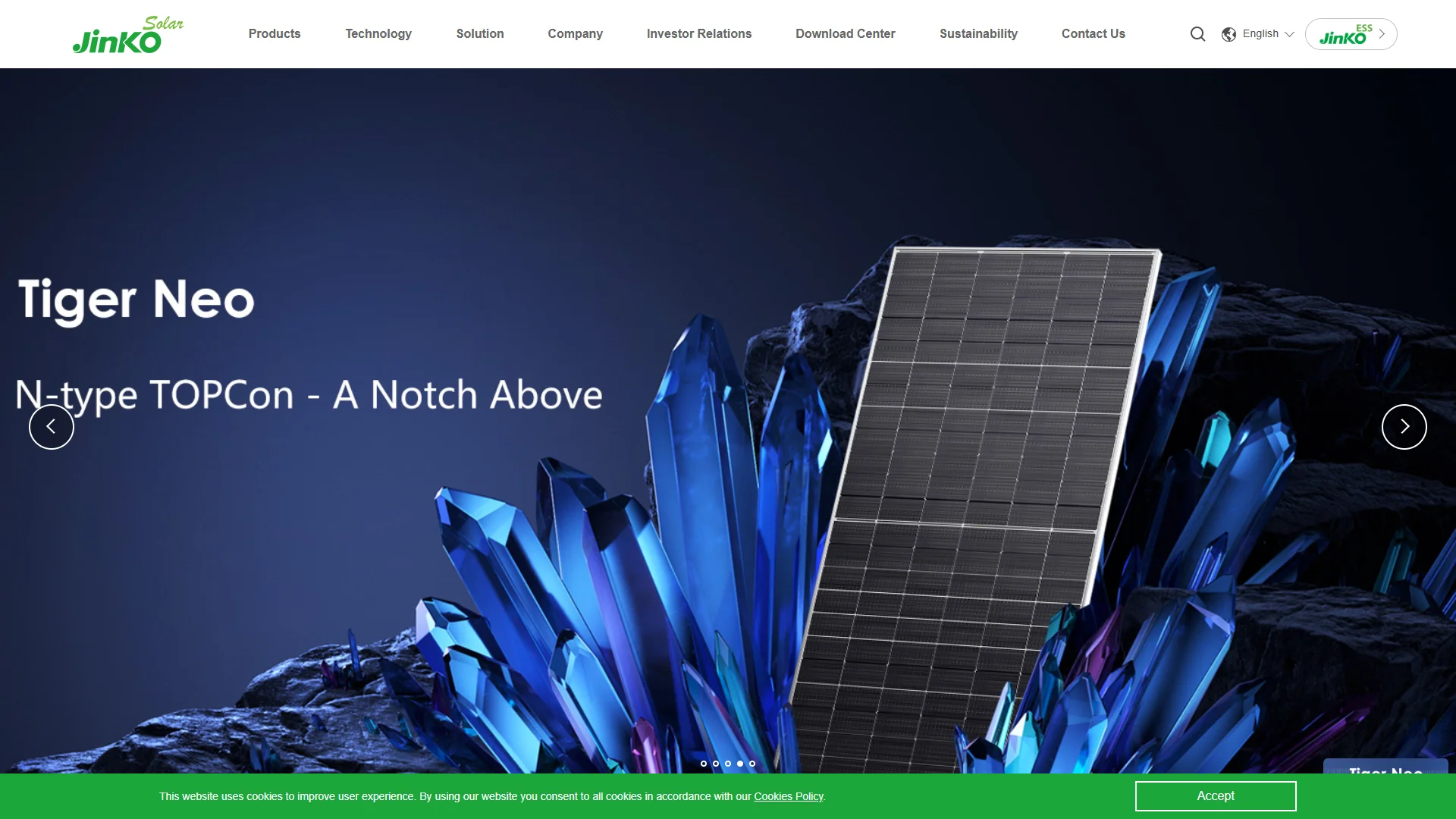
Overview: Jinkosolar is a major solar technology brand whose official materials cover photovoltaic products and energy-storage solutions. Its storage positioning is relevant to projects that want generation and storage considered within one renewable-energy supply chain. Public product availability, ratings, chemistry, warranty terms, and regional certifications can vary by model and market, so buyers should request the current technical datasheet for the intended installation.

For BESS procurement, Jinkosolar is most relevant where the project requires more than a standalone battery cabinet. A solar-plus-storage design may involve battery packs, battery-management systems, power-conversion equipment, energy-management controls, thermal management, fire protection, monitoring, and grid interconnection. The precise scope supplied by Jinkosolar should be verified contractually because a product page or broad solution description does not by itself establish that every project service is included.
The company’s value proposition is closely connected to its established solar manufacturing and project ecosystem. This can simplify technical coordination when a project combines photovoltaic generation with storage, although the buyer should independently evaluate inverter compatibility, control-system interoperability, software functions, degradation assumptions, and long-term service arrangements. The most useful comparison is therefore not simply battery capacity, but the completeness of the proposed system and the evidence supporting lifetime performance.
Pros / Key Features
- Official materials identify both solar and energy-storage activities, supporting solar-plus-storage project evaluation.
- Potential fit for utility-scale, commercial, and industrial applications, subject to the selected product and region.
- System-level assessment can include generation, storage, controls, safety, and grid-integration requirements rather than battery capacity alone.
- Product-specific documentation should be used to confirm chemistry, usable energy, power rating, operating temperature, enclosure protection, certifications, and warranty conditions.
Use Cases / Best For
Jinkosolar is best suited to developers, utilities, and commercial or industrial buyers assessing integrated renewable-generation and storage projects. It may also suit organizations that prefer to coordinate PV procurement and BESS evaluation through a solar-focused supplier. For a standalone storage project, the buyer should compare Jinkosolar’s proposed system against specialist storage providers on round-trip efficiency, duration, augmentation strategy, availability guarantees, cybersecurity, and operations support.
2. Generac
Overview: Generac is included in the supplied research roster for the BESS category. The available research dossier does not clearly establish a detailed company background, founding information, location, target markets, or a complete BESS product taxonomy. Consequently, this review does not assign unsupported claims about manufacturing scale, certifications, chemistry, or project geography.

Pros / Key Features
- Generac’s official website is the appropriate source for checking current energy-storage and distributed-energy products.
- The brand can be evaluated in the context of broader backup-power and energy-management requirements.
- Project buyers should request model-specific information rather than relying on the brand name alone.
Use Cases / Best For
Generac is best considered by customers seeking to evaluate BESS as part of a wider distributed-energy, resilience, or backup-power strategy. Before selection, buyers should confirm whether the proposed product is intended for residential, commercial, industrial, or utility use and should obtain current documentation covering usable capacity, continuous and peak power, controls, installation requirements, service coverage, and warranty terms.
3. Moment Energy
Overview: Moment Energy is presented in the supplied research material as a BESS company focused on second-life battery systems. The available description emphasizes safety from battery receipt through system commissioning, together with continuous monitoring and electrical and thermal safeguards. It also references battery cells meeting UL 1973 Annex E, modules tested to UL 9540A, and rack-level evaluation against UL 1973 with UL 9540A testing.
Pros / Key Features
- Second-life battery orientation can support projects evaluating reuse-based storage options.
- The supplied material emphasizes incoming-battery inspection and system commissioning.
- Continuous monitoring and electrical and thermal safeguards are identified as part of the safety architecture.
- The dossier identifies commercial and industrial applications among the intended use cases.
Use Cases / Best For
Moment Energy is best suited to commercial and industrial buyers investigating second-life BESS deployments, provided the project team is comfortable validating battery history, remaining useful life, degradation, replacement planning, and insurance requirements. Procurement teams should verify the exact test scope, certification status, performance warranty, software capabilities, and availability of service personnel for the project location.
4. ESS Inc.
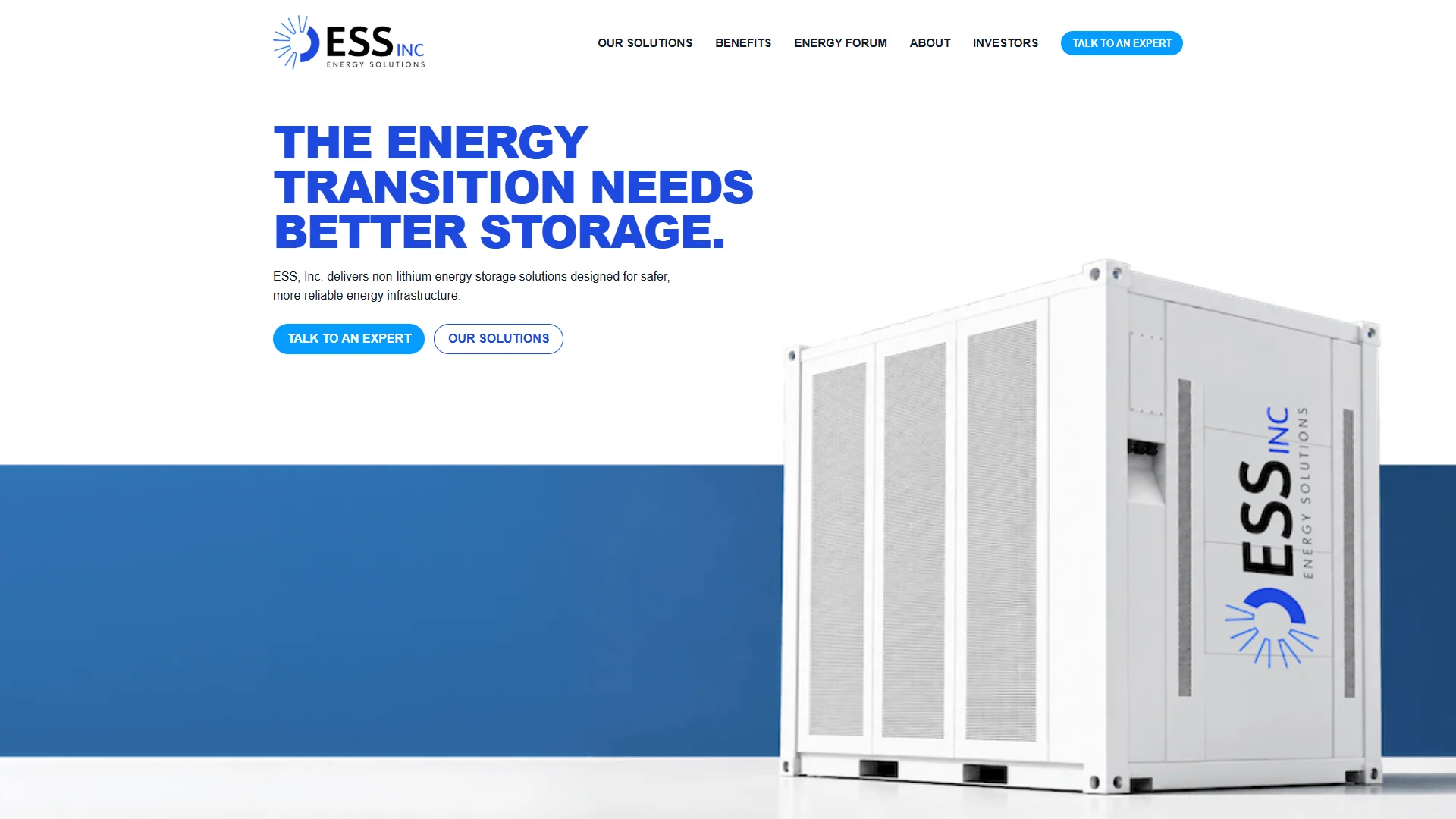
Overview: ESS Inc. presents itself as an energy-storage technology company delivering integrated solutions intended to address limitations associated with common battery systems. The supplied research describes modular, non-lithium storage for utilities, AI-oriented data centers, critical infrastructure operators, and commercial and industrial customers. Current chemistry and product claims should be confirmed against the company’s latest official technical literature because storage products and terminology can change.
Pros / Key Features
- Non-lithium positioning provides an alternative technology pathway for stationary-storage projects.
- Modular system design is identified in the supplied research material.
- The stated customer scope includes utilities, data centers, critical infrastructure, and commercial and industrial facilities.
- The company’s focus is relevant to projects comparing storage duration, safety architecture, and lifecycle considerations.
Use Cases / Best For
ESS Inc. is best for developers and infrastructure operators evaluating long-duration or non-lithium storage alternatives. Its suitability depends on the required discharge duration, power-to-energy ratio, site footprint, operating environment, interconnection design, and financing model. Buyers should request validated performance data, degradation assumptions, round-trip efficiency, fire-safety documentation, warranty coverage, and evidence of deployments comparable to the proposed project.
5. Aikosolar
Overview: Aikosolar, also known as AIKO in its public product materials, is primarily described in the supplied research as a photovoltaic-module company. Its ABC module platform is presented for residential, commercial and industrial, and utility-scale solar applications. The available information does not clearly establish Aikosolar as a standalone BESS manufacturer, so it should not be assumed to provide battery systems without confirmation from an official product page or project proposal.

Pros / Key Features
- ABC modules are described as high-power products designed to improve solar generation value.
- The supplied material discusses residential, commercial and industrial, and utility-scale applications.
- AIKO states that its modules are intended to maintain performance in challenging conditions, including difficult terrain and environmental exposure.
- The company’s solar focus may be relevant when storage is being evaluated as part of a broader PV project.
Use Cases / Best For
Aikosolar is best considered by solar developers and owners comparing photovoltaic generation equipment, particularly for projects that may later integrate a separately sourced BESS. Buyers seeking a complete battery-storage package should verify whether AIKO is supplying the battery, inverter, controls, and commissioning scope or only the PV modules.
How to Choose a BESS Company
1. Match the technology to the duty cycle
Identify whether the system is intended for backup power, peak shaving, renewable-energy shifting, frequency regulation, capacity support, or long-duration discharge. Compare nominal energy with usable energy and examine the continuous and peak power ratings.
2. Check independent safety and certification evidence
Request current documentation for the complete system, not only individual cells. Relevant materials may include battery, inverter, enclosure, fire-protection, electromagnetic-compatibility, and grid-interconnection certifications. Test reports should clearly identify the tested configuration and applicable standard.
3. Review lifecycle economics
Compare round-trip efficiency, degradation, augmentation, expected cycle life, warranty throughput, operating limits, replacement parts, and software fees. A lower initial price may not produce the lowest lifetime cost if usable capacity declines quickly or augmentation is excluded.
4. Evaluate integration and controls
Confirm compatibility with PV inverters, microgrids, energy-management systems, utility controls, and site meters. Clarify who is responsible for engineering, procurement, construction, commissioning, cybersecurity, remote monitoring, and performance testing.
5. Confirm service and project support
Ask about response times, local technicians, spare parts, remote diagnostics, training, warranty exclusions, and end-of-life handling. A BESS is a long-term infrastructure asset, so service capability can be as important as the battery specification.
6. Validate the supplier’s exact role
Some companies manufacture batteries, some provide integrated systems, and some primarily supply solar modules or distributed-energy equipment. The purchase agreement should identify the system integrator, equipment manufacturers, performance guarantor, and party responsible for regulatory compliance.
Final Verdict
Jinkosolar ranks first in this comparison because its publicly established solar and storage positioning makes it a practical starting point for projects seeking coordinated renewable generation and BESS evaluation. Moment Energy is differentiated by its second-life battery focus and stated safety architecture. ESS Inc. is relevant to buyers comparing non-lithium and potentially long-duration storage approaches. Generac should be assessed within a broader distributed-energy and resilience context, while Aikosolar is primarily relevant as a photovoltaic supplier rather than a confirmed standalone BESS manufacturer. The final choice should be based on project-specific technical documentation, certifications, warranty terms, lifecycle economics, and service arrangements.
FAQs
What does BESS mean?
BESS means battery energy storage system. It normally includes batteries, battery-management equipment, power-conversion equipment, controls, monitoring, thermal management, and safety systems used to store and dispatch electrical energy.
Is the largest battery manufacturer always the best BESS supplier?
No. The best supplier depends on the project’s duration, power requirement, chemistry, safety requirements, grid rules, controls, warranty, service network, and total cost of ownership. Manufacturing scale is only one evaluation factor.
What documents should a buyer request before ordering?
Buyers should request a current datasheet, single-line diagram, efficiency curve, degradation model, warranty, certification and test documents, fire-safety plan, commissioning procedure, maintenance schedule, cybersecurity information, delivery scope, and references for comparable installations.