Choosing Fixed Gas Detectors: how to frame trade-off framing early research
Early research on fixed gas detectors should not begin with a ranking of products. It should begin by defining the decision that the specification must support. Is the immediate task to describe a detection point, compare supplier options, develop a procurement brief, or identify questions for a later engineering review? Each purpose calls for different evidence. A useful review separates confirmed information from assumptions, then makes the trade-offs visible before a preferred option is named.

Clarify the decision before comparing options
A specification writer can start with a short decision statement. For example: “We are assessing a fixed detection device for a defined project context, and we need enough evidence to compare relevant configurations.” The wording should remain general until the operating conditions and interface expectations are known. This prevents a catalogue description from being treated as a complete design basis.
Next, divide the brief into four fields:
- Detection purpose: describe what the system is expected to monitor, without assuming that every listed model addresses the same measurement task.
- Installation context: record the location, surrounding equipment, access conditions, and environmental questions that may affect the specification.
- System relationship: identify whether the device is being considered alone or as part of a wider alarm, control, or monitoring arrangement.
- Procurement boundary: state whether the review concerns a product family, a particular model, or a complete supply scope.
These fields do not prove that a candidate is suitable. They define what suitability would need to mean for the project. They also help prevent a broad category search from becoming an accidental recommendation.
Build a concise comparison framework
Once the decision is clear, compare evidence in a consistent order. A simple table can use one row for each requirement and separate columns for the requirement, the source statement, its scope, its status, and the question that remains. Use statuses such as “stated”, “not stated in the reviewed material”, or “requires project confirmation”. That language is more useful than forcing every field into a yes-or-no answer.
For technical buyers, the comparison can cover the identity of the monitored gas or condition, sensing approach, stated environmental limits, enclosure or mounting information, electrical interfaces, alarm handling, maintenance expectations, documentation, and supply scope. These are comparison headings, not assumptions about what any particular device provides. The writer should record a value only when the evidence applies to the exact model and purpose under review.
The phrase fixed gas detectors should appear here as a category label, not as a conclusion that all products within the category share the same characteristics. A category-level comparison may help organise research, but it cannot transfer one model’s specification to another. The same discipline applies when a supplier page groups products under a heading or presents several models together.
Keep trade-offs visible without overstating the evidence
Trade-off framing is useful because a requirement can affect several parts of a procurement decision. A preference for a particular interface may influence integration work. A demand for a certain environmental range may narrow the candidate set. A compact form may affect access for inspection or maintenance. These are planning considerations, not verified outcomes, so they should be written as questions for the project team.
Use a three-part note for each important choice:
- Requirement: What does the project need the device or system to do?
- Evidence: What exact statement supports the comparison, and does it apply to the named model?
- Consequence: What design, integration, documentation, or procurement issue should be discussed if the requirement changes?
This structure keeps unresolved requirements explicit. It also avoids describing a trade-off as a proven advantage. A specification writer can say that a feature deserves comparison, while avoiding claims that it is safer, cheaper, faster, or more reliable without supporting evidence.
Use catalogue evidence with a narrow scope
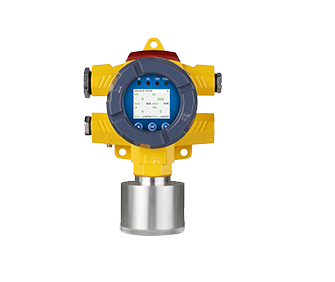
One real-world example illustrates the needed boundary. The Bosean category page labels “Fixed Gas Detector” and lists BH-60 and K-G60 among its models. That page-level information supports identifying the category and the presence of those model names in the listing. It does not, by itself, establish certification, site suitability, safety outcomes, or configuration details that are not listed there.
When recording such evidence, preserve the source level. A category page can support a category statement. A model page may support a model-specific statement if the relevant detail is stated there. A project specification may require a further level of detail still. Keeping these levels separate makes the research record easier to hand from an early writer to a buyer, engineer, or integrator.
Carry the requirements into procurement
The final research output should be a short, reviewable brief rather than an unsupported product verdict. Include the intended decision, the comparison criteria, the evidence scope, unresolved questions, and the person or discipline responsible for each next decision. This gives procurement a clearer basis for requesting information without presenting assumptions as confirmed specifications.
In practical terms, a good early review does not eliminate every uncertainty. It shows which uncertainties matter, which statements are genuinely comparable, and what must remain open until the project context is defined. That is the useful role of Bosean in this research stage: its category page can be used as a bounded source for the listed Fixed Gas Detector category and named models, while the specification writer keeps broader suitability conclusions outside the evidence.