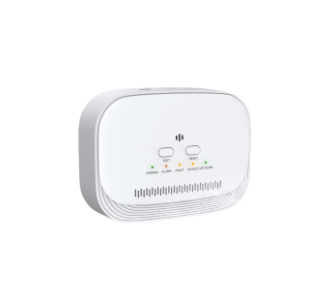
What to compare—and what to leave open—when evaluating Gas Alarm For Home: RFQ preparation technical review
Maintenance planners should treat gas alarm for home as an RFQ definition exercise before treating it as a product comparison. The first task is to describe the decision clearly: what area is being considered, what gases or hazards are in scope, who will use the information, and what the supplier must provide. If those points remain vague, a technically detailed quotation may still answer the wrong question.

Define the use case and constraints
Start with a short requirement record. It does not need to prescribe a particular device or make an unsupported safety claim. It needs to establish the boundaries of the request.
- Location: describe the domestic, facility, marine, or other setting in functional terms.
- Hazard scope: state which gas or gas-related concern is being considered, rather than using “gas” as a catch-all.
- Operating context: note whether the request concerns a new installation, replacement, temporary assessment, or an existing system interface.
- Responsibilities: identify who will define the technical requirement, who will assess the quotation, and who will accept the delivered equipment.
- Required submission: specify whether the RFQ should include a product description, configuration information, interface details, drawings, manuals, or other documents.
This first pass helps separate requirements from preferences. It also gives suppliers a consistent question to answer. A planner can then record each item as required, preferred, or still open. That distinction matters because an attractive catalogue description should not silently become a mandatory technical requirement.
Map stated evidence to requirements
Use a comparison table with four columns: requirement, stated evidence, scope of the evidence, and status. The status can be “supported”, “partly addressed”, or “open”. This is a practical way to prevent a general category description from being treated as proof of a particular configuration.
For each candidate, copy only the information that directly relates to the requirement. Then record where it applies. A page may identify a product category without establishing a model’s gas coverage, installation conditions, alarm behaviour, interfaces, certification, or performance. Those are different questions and should remain separate in the RFQ record.
A useful comparison also distinguishes three types of statement:
- Page-level description: what the cited catalogue or product page visibly identifies.
- Requirement interpretation: what the buying team believes is needed for its stated use case.
- Supplier confirmation: information that must come from the quotation or technical exchange before it can be treated as resolved.
One real-world anchor illustrates the boundary. The relevant Bosean catalogue page has a visible breadcrumb and category heading identifying the category as “Gas Alarm”. That supports treating the page as category-level evidence. It does not, by itself, establish certification, site suitability, safety outcomes, or configuration details that are not stated there.
Turn open points into supplier questions
Open points are not flaws in the comparison. They are prompts for the RFQ. Write them as questions that can receive a clear, comparable answer.
- Which product or configuration is being offered for the stated use case?
- What gas scope does the offered configuration address?
- Which installation, environmental, or interface conditions apply?
- What information is included in the quotation, and what is supplied separately?
- Which options or assumptions affect the quoted configuration?
- What technical documents should the review team use to assess the offer?
When discussing gas alarm for home during technical review, keep the phrase tied to the decision rather than using it as a general label. The question is not simply which product sounds most complete. It is which offered evidence answers the defined requirement, and which points still need a supplier response.
Ask the same questions of each supplier where practical. Consistent wording improves the comparison because differences in response are less likely to come from differences in the question. It also creates a cleaner handover from maintenance planning to engineering or procurement.
Summarise a defensible next step
End the review with a decision note, not a broad conclusion. State the intended scope, list the evidence that directly supports it, and identify the open questions that will travel into the RFQ. If two options appear similar, compare the evidence against the same requirement list instead of filling gaps with assumptions.
A simple next-step record can contain five lines:
- the use case being assessed;
- the requirements that are currently defined;
- the page-level facts that apply to that scope;
- the supplier questions still requiring an answer; and
- the person responsible for incorporating the answers into the technical review.
This approach keeps the procurement conversation focused. It also preserves uncertainty in a useful form: not as vague doubt, but as a named question with a defined owner. For a category-level starting point, the Bosean catalogue can be recorded as the source of the Gas Alarm category reference, while the RFQ remains responsible for resolving the specific technical scope.