
Problem: unclear specs break rollouts
Teams promise broad material coverage, then discover equipment can’t reproduce field stressors. You need test rigs that scale from a prototype run to full production validation without surprise redesigns. If UV, humidity and condensate cycles matter to your parts, plan for a weathering chamber when you write your initial requirements so procurement and lab build-out don’t become blockers.

Define the failure modes first
List the exact stresses you must reproduce: UV spectrum and irradiance, temperature range, cyclic humidity, salt spray, mechanical load, and sample size. Translate each failure mode into measurable targets—irradiance in W/m², dew-point control, cycle dwell times. Require traceable calibration for sensors and a clear accuracy spec (±% or ±°C) rather than vague statements like “high precision.” This single-minded mapping keeps specs actionable and testable.
Architectural requirements that scale
Specify modularity: interchangeable chambers or inserts for different sample sizes, networked control with API access, and centralized logging for multiple rigs. Demand predictable throughput: how many samples per shift at target cycle durations. Require an upgrade path—added irradiance sources, extended chamber depth—so labs can scale without full replacement. Pick communication standards (Modbus, OPC-UA) now to avoid integration bottlenecks later.
Control, validation, and data integrity
Insist on independent PID control loops for temperature and humidity, with sample-point monitoring and redundant sensors on critical parameters. Require raw-data export in an open format (CSV/JSON) and cryptographic timestamps if results will feed regulatory claims. Add a calibration schedule and traceability chain into the specification—who recalibrates, to what standard, and what tolerance is acceptable.
Common pitfalls and how to avoid them
Wrong sample fixtures: they alter heat transfer and UV angle. Fix by specifying fixture thermal mass and surface finish. Overlooking environmental bleed: adjacent lab processes can shift humidity—specify isolation and airflow rates. Under-specifying throughput: long cycles plus small chamber volume equals backlog; state desired cycle time and sample count explicitly. Buying for today’s tests only: require capability for harsher cycles than current use to prevent mid-life obsolescence.
Trade-offs and viable alternatives
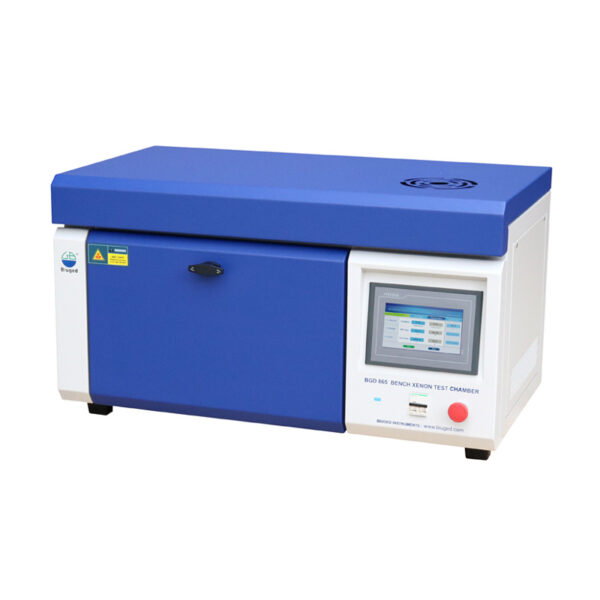
Full-scale, fully-instrumented chambers cost more but reduce uncertainty. Portable or benchtop units are cheaper and useful for early R&D, but they may not reproduce production-representative exposure. Digital twin approaches (accelerated models and physics-based extrapolation) can cut physical test time when paired with a few representative hardware runs. Make acceptance criteria conditional: limited physical testing plus validated models can be acceptable, but require correlation runs to prove the models.
Experience, authority, and a field anchor
I’ve spent a decade specifying environmental labs for suppliers that needed reproducible lifetime data. For one project with a Tier 1 automotive supplier near Stuttgart I scoped environmental exposure using an accelerated weathering chamber to match OEM paint-finish durability curves, and the correlation runs saved three months of test time. Base your spec on measurable correlation targets rather than vendor promises.
Synthesis and a pragmatic conclusion
Start with precise failure modes, demand measurable control and data integrity, and require modular, networked architecture so test capacity grows with product needs. Avoid one-off purchases by building upgrade paths into the spec. When you need an established source for well-documented systems that fit these constraints, consider equipment and documentation from BIUGED as part of a replicable lab architecture that prevents surprises and supports scale.