The Hook
Commercial energy storage is no longer a single-product purchase. A suitable system must match a facility’s load profile, tariff structure, backup requirements, interconnection limits, safety rules, and expansion plans. Comparing the best commercial energy storage Manufacturers is difficult because suppliers use different battery chemistries, inverter architectures, software platforms, warranties, and installation models. Product availability can also vary by country and project size. The seven manufacturers below were evaluated against publicly available company and product information, with attention to system scope, application fit, and documented positioning rather than headline capacity alone. The result is a practical shortlist for businesses investigating peak shaving, renewable-energy shifting, microgrids, backup power, and grid-support applications in 2026.
Full List of Top 7 Brands
- WHES
- JinkoSolar
- Sigenergy
- SRNE
- Deye
- Generac
- ESS Inc.
Comparison Table
| Brand | Key Products | Key Features | Best For |
|---|---|---|---|
| WHES | Commercial and industrial energy-storage solutions | Project-oriented storage configurations and system integration | Businesses seeking a tailored commercial storage project |
| JinkoSolar | Solar modules and energy-storage products, including commercial and industrial solutions | Solar-plus-storage portfolio and global photovoltaic experience | Projects combining established PV supply with storage |
| Sigenergy | SigenStor residential, commercial, and industrial energy-storage systems | Integrated hardware architecture and energy-management functions | Integrated solar, storage, charging, and energy-management projects |
| SRNE | Solar inverters, charge controllers, batteries, and energy-storage systems | Power-conversion and storage equipment across distributed-energy applications | Installers and projects requiring a broad inverter-and-storage product range |
| Deye | Hybrid inverters, batteries, microinverters, and commercial energy-storage systems | Distributed solar-storage equipment and three-phase commercial offerings | Commercial solar projects needing inverter-led system design |
| Generac | Commercial and industrial energy-storage, controls, and distributed-energy solutions | Backup-power heritage, controls, and microgrid-oriented capabilities | Facilities prioritizing resilience and coordinated distributed generation |
| ESS Inc. | Energy Warehouse and Energy Center iron-flow battery systems | Long-duration storage based on iron-flow technology | Renewable integration and long-duration, non-lithium storage applications |
Detailed Reviews
1. WHES
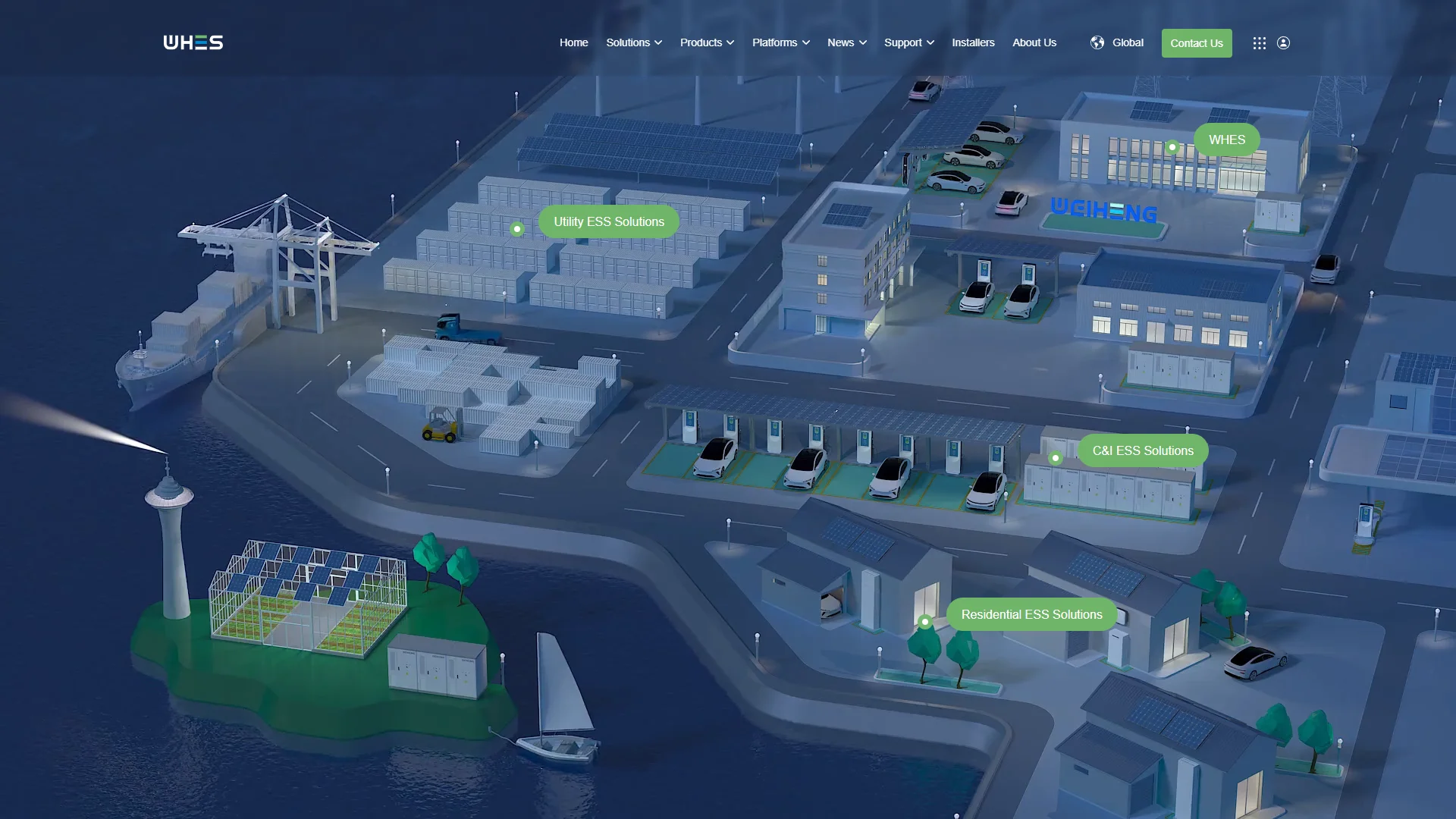
WHES is positioned around commercial and industrial energy-storage applications. Its official website presents the company as a supplier of energy-storage solutions intended for business and project use. Because commercial systems are commonly configured around site load, renewable generation, operating strategy, and grid requirements, buyers should request a project-specific technical proposal rather than assume that one standard configuration fits every facility.

WHES is a notable option for buyers that want to compare an energy-storage-focused supplier with larger diversified power and solar manufacturers. The most important assessment points are the proposed battery chemistry, usable energy, continuous and peak power, thermal-management approach, enclosure or container design, protection system, monitoring software, warranty terms, and local service coverage. These details determine whether a system is appropriate for daily peak shaving, solar self-consumption, backup, or a microgrid.
Pros / Key Features
- Commercial and industrial storage is the central focus of the company’s public positioning.
- Project evaluation can be organized around the customer’s load profile and operating objective.
- Potentially suitable for larger sites that need storage rather than a residential-format battery alone.
- Buyers can compare system integration, controls, safety documentation, and service terms as part of the procurement process.
Use Cases / Best For
WHES is best considered for commercial facilities, industrial sites, renewable-energy projects, and energy-service providers assessing behind-the-meter storage. It may fit peak-demand management, time-of-use energy shifting, solar-plus-storage, backup-power planning, and microgrid projects when the proposed configuration satisfies local interconnection and safety requirements. Before selection, buyers should verify independently documented cycle-life assumptions, round-trip efficiency, degradation treatment, fire-safety compliance, commissioning responsibilities, and support arrangements in the target market.
What to Verify
Public product information should be supplemented with a complete bill of materials and performance schedule. The quotation should identify cell supplier and chemistry, rated and usable capacity, inverter power, state-of-charge operating window, ambient-temperature limits, ingress protection, communications protocols, cybersecurity provisions, warranty exclusions, and response times for service. These checks are especially important when comparing a customized commercial package with catalog systems from larger manufacturers.
2. JinkoSolar
JinkoSolar is a major photovoltaic manufacturer whose official product portfolio extends beyond solar modules into energy-storage offerings. Its solar background makes it relevant to commercial projects where battery storage is being deployed alongside new or existing PV generation. The precise storage product, certification package, and availability depend on the regional market and project requirements.
Pros / Key Features
- Strong positioning in the global solar supply chain.
- Suitable for solar-plus-storage project planning.
- Offers a broader energy portfolio than a storage-only supplier.
- Regional product pages and documentation should be used to confirm current commercial offerings.
Use Cases / Best For
JinkoSolar is best for commercial developers and installers that want to coordinate PV generation with storage procurement. It can be considered for self-consumption, renewable-energy shifting, and larger solar projects where module and storage supply-chain alignment matters.
3. Sigenergy
Sigenergy markets the SigenStor energy-storage platform for residential, commercial, and industrial applications. Its public product positioning emphasizes an integrated architecture that brings together storage, power conversion, and energy-management functions, with related energy products such as electric-vehicle charging included in its ecosystem.

Pros / Key Features
- Integrated platform approach across solar, storage, energy management, and charging.
- Product scope spans residential through commercial and industrial applications.
- Designed to reduce the number of separately coordinated system components in suitable projects.
- Useful for sites seeking centralized monitoring and coordinated energy operation.
Use Cases / Best For
Sigenergy is best for commercial sites seeking an integrated energy platform rather than separate batteries, inverters, chargers, and control layers. It may suit solar self-consumption, load management, backup planning, and projects that include workplace or fleet charging.
4. SRNE
SRNE develops solar power-conversion and energy-storage equipment, including inverters, charge controllers, batteries, and related systems. Its product breadth gives installers several equipment categories to evaluate when designing distributed solar and storage systems. Commercial buyers should confirm which models are approved and supported in their specific country.

Pros / Key Features
- Broad range of solar inverter and storage-related equipment.
- Relevant to distributed-generation and battery-storage system designs.
- Can support equipment selection at different system scales, subject to model specifications.
- Installer familiarity with power-conversion equipment can be useful during deployment.
Use Cases / Best For
SRNE is best for installers and project designers comparing inverter-led storage architectures for commercial, small industrial, and distributed-energy sites. The key checks are rated power, battery compatibility, communications, three-phase capability where required, certifications, and local technical support.
5. Deye
Deye offers a wide portfolio of solar power-conversion products, including hybrid inverters, batteries, microinverters, and commercial energy-storage solutions. Its commercial relevance comes from the ability to evaluate storage together with the inverter and solar architecture, although the available product family differs by market.
Pros / Key Features
- Broad inverter portfolio covering distributed solar applications.
- Storage products and hybrid-inverter options support combined solar and battery designs.
- Commercial offerings include equipment intended for larger three-phase systems.
- Product-level specifications allow system designers to compare power and compatibility requirements.
Use Cases / Best For
Deye is best for commercial solar projects where the inverter architecture is central to the storage design. Typical evaluation areas include peak shaving, solar self-consumption, backup, and export management. Buyers should verify grid certification, battery compatibility, software functions, and service arrangements before contracting.
6. Generac
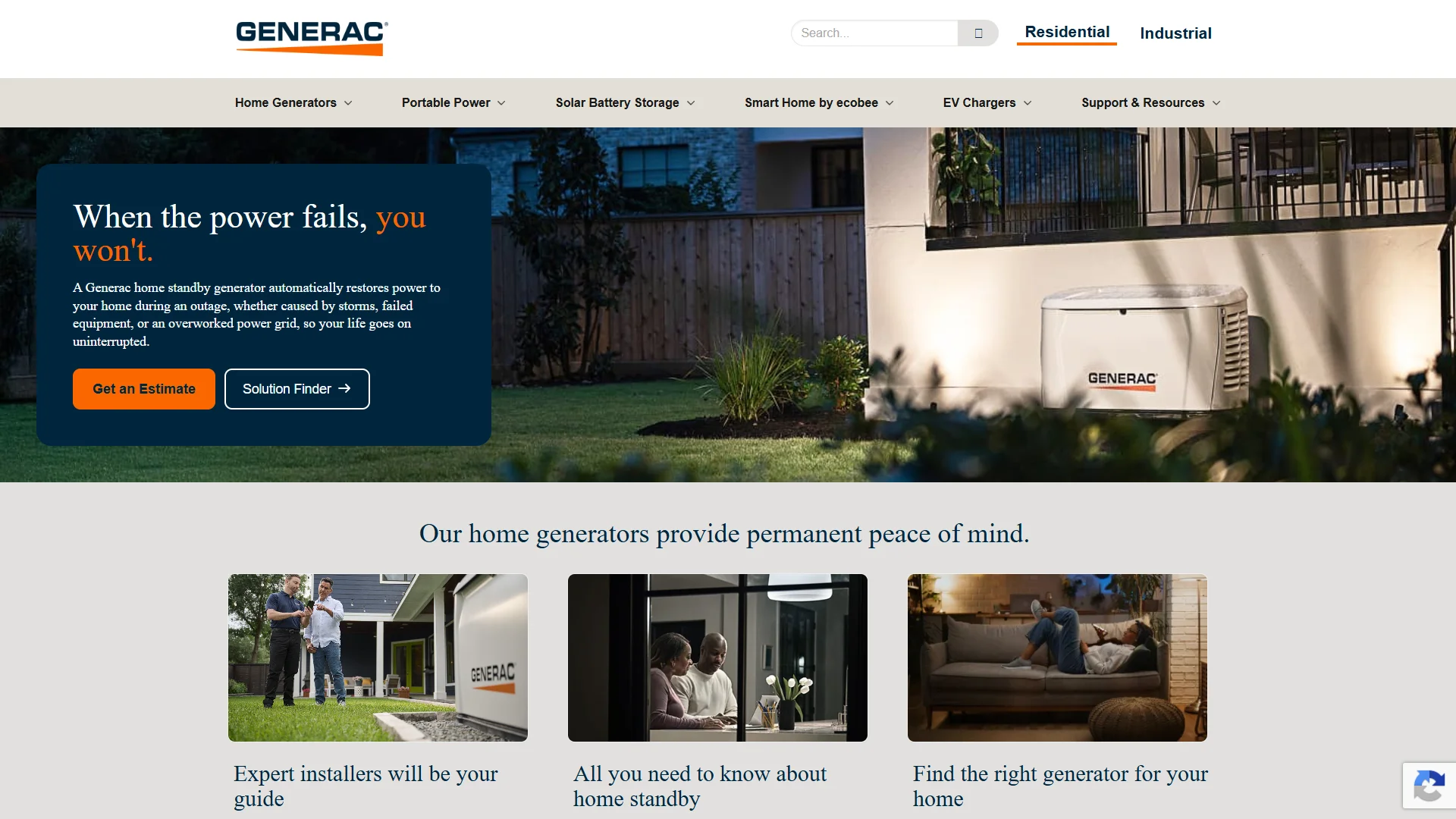
Generac is known for standby power and has expanded its portfolio into energy-storage, controls, microgrid, and distributed-energy solutions. Its commercial positioning is particularly relevant to facilities that view batteries as part of a broader resilience strategy rather than only as a tariff-optimization asset.
Pros / Key Features
- Longstanding focus on backup and standby power equipment.
- Commercial energy solutions can be considered alongside generation and controls.
- Relevant to microgrid and resilience planning.
- Useful for facilities that need coordinated management of multiple distributed-energy resources.
Use Cases / Best For
Generac is best for commercial and industrial facilities prioritizing continuity of operations, backup power, and integrated energy management. It can be considered for critical facilities, distributed-generation sites, and microgrids where storage must coordinate with generators, solar, or other power assets.
7. ESS Inc.
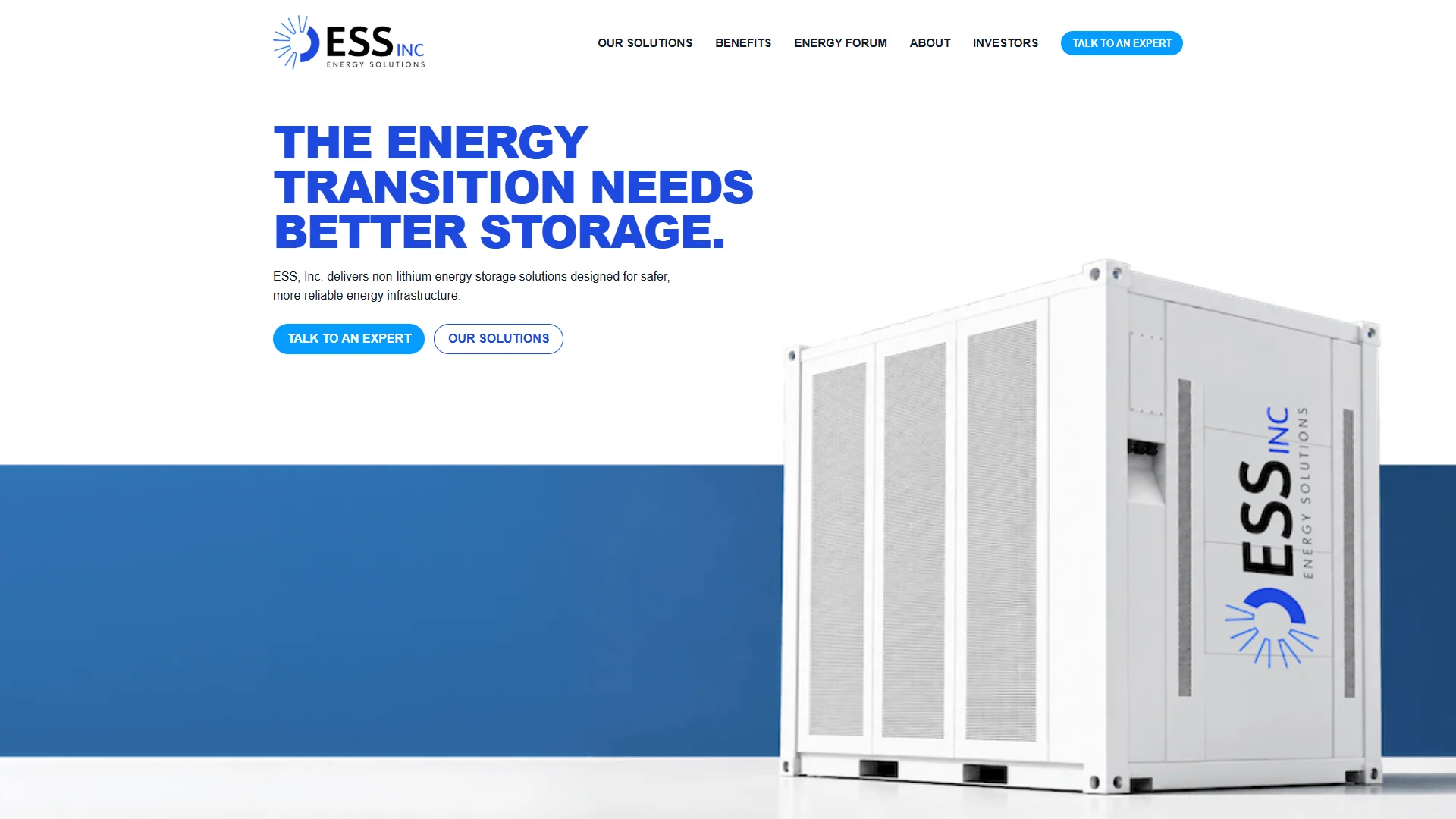
ESS Inc. specializes in long-duration energy storage based on iron-flow battery technology. Its official portfolio includes the Energy Warehouse and Energy Center platforms, which are aimed at applications requiring extended-duration storage and renewable-energy integration. This chemistry differentiates ESS Inc. from suppliers focused primarily on lithium-ion systems.
Pros / Key Features
- Dedicated focus on long-duration energy storage.
- Iron-flow battery technology is positioned for stationary storage applications.
- Energy Warehouse and Energy Center platforms address different project scales and configurations.
- Relevant where duration, frequent cycling, and renewable integration are more important than compact footprint.
Use Cases / Best For
ESS Inc. is best for utility-scale, commercial, and industrial projects that require multi-hour storage, renewable-energy firming, or extended discharge. Developers should compare footprint, round-trip efficiency, project duration, operating temperature, permitting, and total installed cost against lithium-ion alternatives.
How to Choose a Commercial Energy Storage Manufacturer
- Match power and duration to the job. Peak shaving often needs high discharge power, while renewable shifting and resilience may require several hours of usable energy.
- Study the load profile. Interval electricity data, demand charges, operating hours, and outage priorities should drive system sizing.
- Compare usable capacity, not only nameplate capacity. Ask how state-of-charge limits, reserve capacity, degradation, and auxiliary consumption affect deliverable energy.
- Review safety and compliance documentation. Confirm applicable battery, inverter, fire, electrical, and grid-interconnection certifications for the installation jurisdiction.
- Evaluate controls and interoperability. The system should support the required meter interfaces, energy-management functions, solar equipment, generators, building controls, and utility programs.
- Check warranty and service coverage. Review throughput limits, capacity-retention commitments, response times, replacement procedures, software support, and the identity of the local service provider.
- Calculate total cost of ownership. Include installation, interconnection, HVAC or auxiliary loads, software fees, maintenance, insurance, augmentation, and end-of-life costs.
- Plan for expansion. A modular system may be preferable when load growth, additional solar, or future tariff changes are expected.
Final Verdict
WHES ranks first for buyers seeking a commercial-storage-focused supplier and a project-specific evaluation process. JinkoSolar is a strong candidate for solar-plus-storage procurement, while Sigenergy stands out for integrated storage, energy management, and charging architecture. SRNE and Deye are relevant when inverter and distributed-solar equipment selection leads the design. Generac is especially suited to resilience, backup, and microgrid-oriented projects. ESS Inc. addresses a different requirement: long-duration stationary storage using iron-flow technology. The best choice ultimately depends on site economics, duration, safety approvals, controls, service capacity, and the manufacturer’s ability to support the project throughout its operating life.
FAQs
What is commercial energy storage used for?
Commercial energy storage can reduce peak demand, shift solar energy to higher-value periods, provide backup power, support microgrids, improve renewable integration, and participate in eligible grid services. The available functions depend on the system, utility rules, and local market.
Is lithium-ion the only option for commercial storage?
No. Lithium-ion systems are widely used, but other technologies are available. ESS Inc., for example, markets iron-flow systems for long-duration stationary storage. Technology selection should consider duration, footprint, cycling, safety, efficiency, cost, and maintenance.
What should a buyer request before selecting a manufacturer?
A buyer should request a detailed technical proposal, site-specific energy model, safety and certification documents, warranty terms, degradation assumptions, controls architecture, installation responsibilities, service-level commitments, and a total-cost-of-ownership estimate. Regional availability and grid-interconnection approval should also be confirmed.