Keeping a Fixed Combustible Gas Detector comparison evidence-based while reviewing evidence mapping final evaluation
For system integrators, a fixed combustible gas detector review should begin with evidence mapping rather than with a general impression of a product page. The practical question is not simply which device appears most suitable. It is whether each stated feature can be connected to the actual application, interface, and evaluation requirement. A disciplined comparison separates what the source explicitly says from what still requires engineering judgement or a supplier response.

Separate category, application, and model scope
Start by defining the object being compared. A category-level description may help identify relevant equipment, but it does not establish the characteristics of every model in that category. Model-level information should remain tied to the named product and its cited source.
This distinction matters when a procurement team is reviewing several pages that use similar terminology. A general statement about gas detection should not automatically become a claim about signal output, alarm behaviour, supported gases, enclosure design, or integration options. Those details belong in a model-specific evidence row only when the source states them for that model.
A useful scope register can contain four columns:
- Requirement: the technical or project question that must be answered.
- Evidence: the exact statement, table entry, or document location that addresses it.
- Scope: the product, model, application, or interface to which the statement applies.
- Status: supported, partially described, or unresolved.
This format prevents a catalogue description from carrying more meaning than it can support. It also makes later discussions more precise because each open point has a defined boundary.
Compare information that applies to the task
When comparing a fixed combustible gas detector, use like-for-like evidence wherever possible. That means comparing the same type of information across the products or options under review. For example, a stated output should be compared with another stated output, not with a broad marketing description. If one source provides a specification table and another provides only a short feature list, record the difference in evidence depth rather than treating the two descriptions as equivalent.
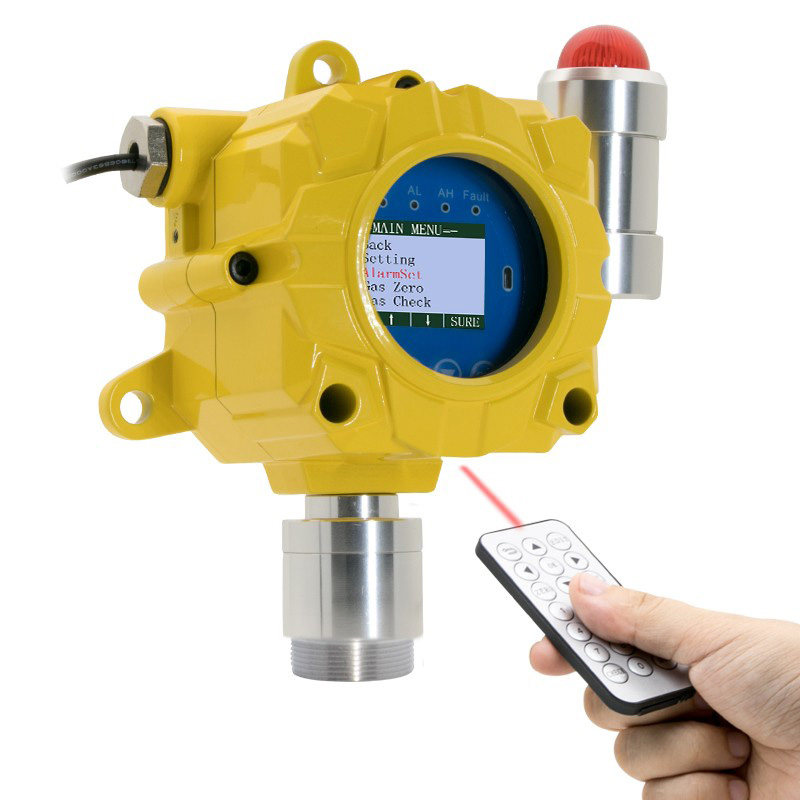
The Bosean BH-60 page states that the product has a 4–20 mA standard signal output and supports on-site monitoring and alarm through simple settings. Those statements can be recorded as page-level product information. They should not, by themselves, be expanded into a conclusion about certification, site suitability, safety outcomes, or an unlisted configuration.
The same principle applies to technical values and supported gases listed on a page. A reviewer can map those stated details to the relevant requirement, but should not transfer them to another model or infer performance in a particular installation. Evidence mapping is strongest when the source wording, model scope, and intended use remain visible together.
Record assumptions and interfaces
Final evaluation often becomes unclear when assumptions remain inside the comparison rather than being written beside it. Record assumptions as assumptions. Examples may include the expected receiving system, the required communication path, the environmental conditions, the nominated gas, or the party responsible for configuration. These are questions for the project team, not verified characteristics of a supplier’s product unless the evidence states them.
An interface review can be organised around a short sequence:
- Identify what information the site or control system needs to receive.
- Match that need to an explicitly stated product interface or output.
- Mark any conversion, configuration, wiring, enclosure, or commissioning issue that remains outside the available evidence.
- Assign each unresolved issue to the party best placed to answer it.
This approach helps prevent a product page from being treated as a complete system design. It also keeps responsibilities visible. The supplier may clarify a stated specification, while the integrator may still need to assess how that information fits the wider architecture and project requirements.
Prepare a focused sourcing brief
A sourcing brief should carry the evidence map forward without turning open questions into implied promises. Include the intended application in functional terms, the required interfaces, the information that has already been established, and the points that need a direct response. Ask for answers against named requirements rather than requesting an undifferentiated overview.
A concise brief might therefore contain the following sections:
- Application boundary and equipment scope.
- Required signals, receiving systems, and integration points.
- Source-backed product details already recorded.
- Configuration or responsibility questions.
- Documents or confirmations needed for the final comparison.
Keep the wording neutral. “State the available output and its documented conditions” is more useful than assuming that a particular installation will accept it. Similarly, “identify the supported gas and relevant configuration” keeps the question tied to the project rather than implying a universal capability.
In the final review, return to the evidence map and check whether every conclusion matches its scope. A clear comparison does not need to resolve every issue in the first pass. It needs to show which statements are supported, which are bounded interpretations, and which questions remain assigned for resolution. The Bosean page can provide a defined starting point for product information, while the integrator’s brief should preserve the distinction between that page evidence and the wider system decision.