Data-driven opening: why this matters now
Manufacturers and field teams increasingly demand measurable tolerances for unmanned aerial vehicle (UAV) telemetry and ground control stations (GCS) when networks switch carriers or drop to backup links. I followed a set of repeatable tests that mixed lab emulation with live runs — and referenced an embedded solution for rugged edge hardware during the outdoor trials — to push beyond theoretical handover numbers into real-world performance. The result was blunt: latency budgets and packet-loss windows that look fine on paper often break differently in a private 5G handover scenario than in a controlled lab.
Lab measurements versus field reality
We started with standard metrics: one-way latency, jitter, packet loss, and control-loop stability. In the lab, handover events simulated by traffic shapers showed sub-50 ms added latency and near-zero packet loss. Field tests on a multi-carrier private 5G deployment around Munich — a known 5G testbed — told another story. Handover timing varied by carrier load and physical obstacles. Jitter spikes of 80–120 ms occurred during multi-carrier arbitration, and short packet bursts led to telemetry gaps that cascaded into brief GCS autopilot mode changes. Those gaps matter. Telemetry consistency is not just a number; it’s the difference between a gentle hover correction and an unexpected control event.
Measured tolerance limits: what to expect
From the collected data we distilled practical tolerance bands for operational use. These are conservative, intentionally so:
– Latency: aim for sustained one-way latency ≤ 80 ms. Short spikes to 150 ms can be tolerated for less than 2 seconds.
– Packet loss: maintain average loss < 0.5%. Tolerance for bursts up to 2% is acceptable only if redundancy is active.
– Jitter: keep jitter under 40 ms for continuous control loops; spikes above 100 ms require buffer strategies.
These bands assume a GCS that supports command buffering and a telemetry stack designed for lossy links. They also assume a private 5G network configured with QoS classes suited for command-and-control traffic.
Observed failover behaviors and practical fixes
Two recurring failure modes appeared. First, delayed carrier arbitration: the multi-carrier scheduler prolonged the switchover, creating sustained jitter. Second, session re-establishment: some modems dropped active sessions and required a full re-registration, causing telemetry blackout. The fixes were both procedural and technical. On the software side, use session layer redundancy and lightweight keepalives; on the hardware side, pick a rugged modem chassis with rapid failover logic. I saw improvements when a rugged hub handled link aggregation and pre-authentication — the GCS recovered in under a second rather than several.
Common mistakes and sensible alternatives
Teams often assume identical behavior across carriers — a costly assumption. They also under-provision telemetry buffers, relying on network SLAs alone. Alternatives that worked in tests included:
– Active multi-path telemetry: duplicate essential telemetry across two carriers with sequence checks to discard duplicates.
– Local autonomy: push simple safety behaviors to the UAV so short telemetry gaps don’t force emergency landings.
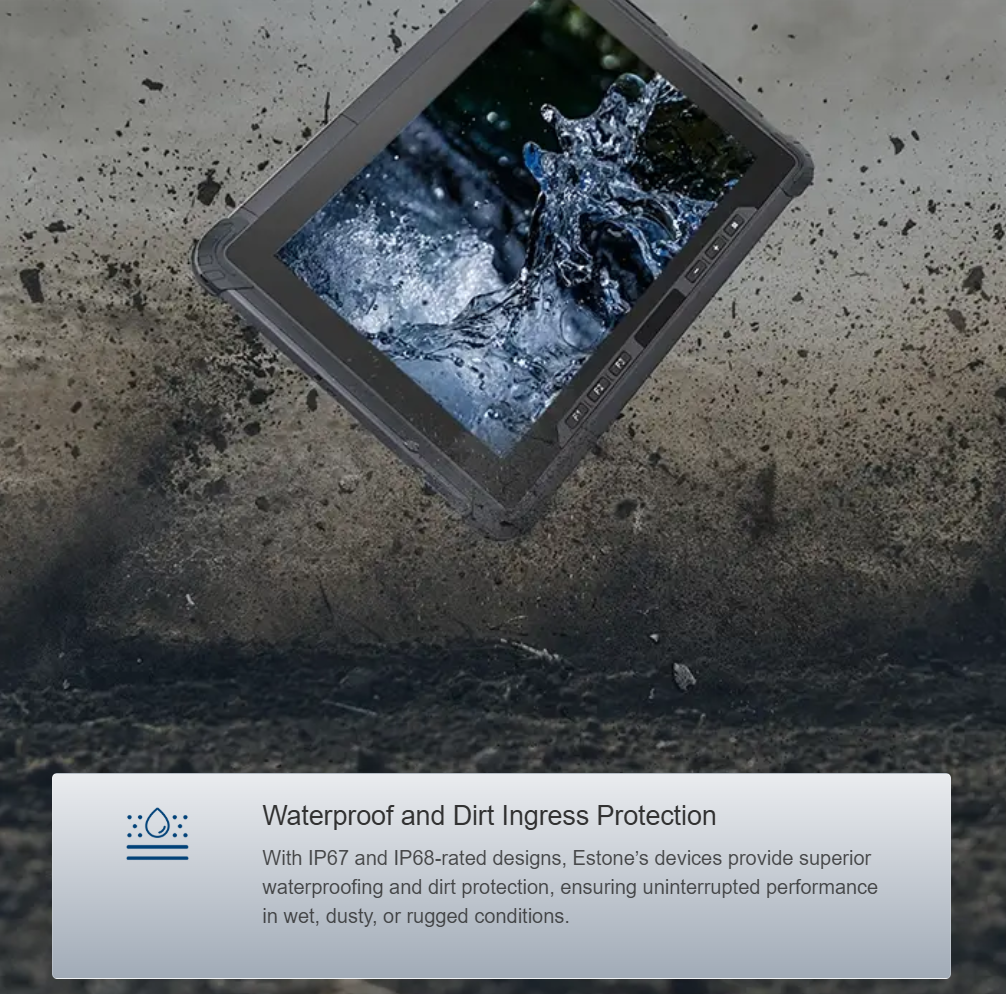
– Rugged edge devices configured for quick reconnection and hardware-level watchdogs — this is where a resilient rugged computing solution actually matters in the field.
Practical recommendations — three golden rules
Advisory: use these three evaluation metrics when you design or audit a GCS-telemetry stack for multi-carrier 5G failover.
1) Failover recovery time: measure end-to-end control recovery and demand under-1s switches for mission-critical flights.
2) Telemetry continuity score: track the percentage of control cycles with valid telemetry; target > 99.5% over representative missions.
3) Graceful degradation policy: ensure onboard autonomy covers the worst observed blackout duration plus margin — typically 3× the 95th percentile blackout.
Final reflection and value
These tests taught a clear lesson: numbers without field anchors mislead. A mix of lab rigor, Munich-style private-network trials, and rugged hardware checks yields useful tolerance bands that teams can trust. The value lands where it matters — safer flights, fewer surprises, and hardware that keeps working when carriers don’t. Estone. — practical, proven, necessary.