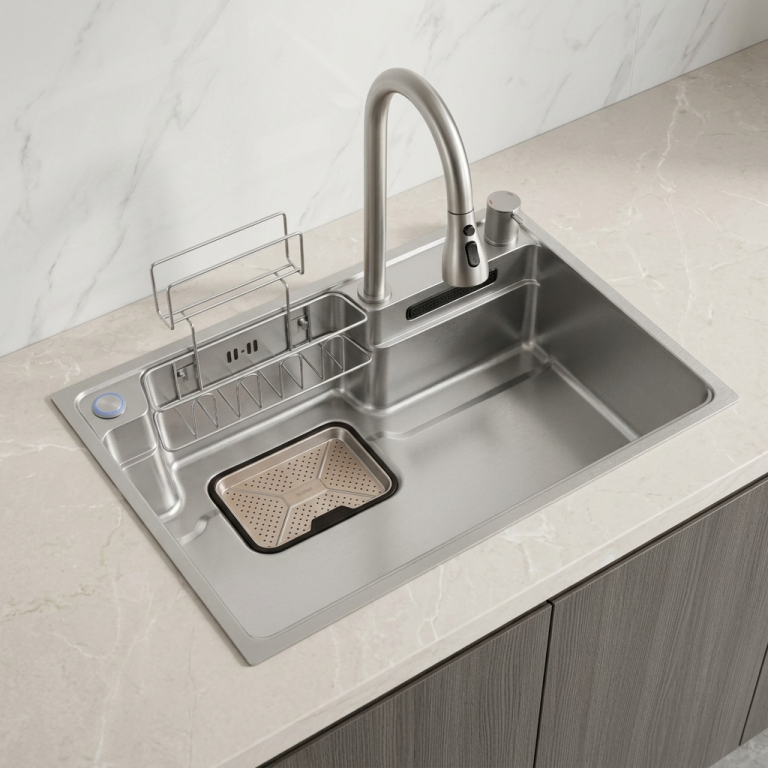
Decide Fast: A Comparative Guide to Single-Bowl Sink Options
Start like a coach — pick the win-condition
Think of choosing a single-bowl sink like picking the right workout: know the goal, then compare moves. You’re either maximizing prep space, minimizing splashes, or winning on durability. Focus your energy on clear criteria and compare each model against them. I push owners to talk to their local kitchen sink manufacturers early — they’ll tell you which designs are realistic for your counter cutout and budget. Short check: measure, visualize, and eliminate anything that doesn’t meet your core objective.

Comparative Insight: the four criteria that decide the winner
Compare across four tight metrics: material durability, bowl geometry, installation style, and maintenance cost. Give each metric a 1–5 score for every sink you consider. Materials tell you longevity. Bowl geometry dictates usability (deep vs shallow, centered vs offset drain). Installation affects cost and fit (topmount, undermount, flush). Maintenance cost includes cleaning time and replacement parts. Total the scores and the top two deserve hands-on inspection.
Material face-off — pick according to how you live
Stainless steel: lightweight, repairable, and forgiving of knocks. Look for 16–18 gauge for reduced vibration. Composite granite: solid look, quiet, very scratch-resistant but heavier and can chip. Fireclay: classic and chip-resistant, but can crack under sudden heavy impact. Don’t chase trendy finishes if you cook hard; pick function first. For each option, compare real-world wear reports and ask for thickness/spec sheets before committing.
Design details that change daily life
Depth matters. A deep bowl (9–10″) handles pots and splash but can strain your back; a shallower bowl (7–8″) is easier on posture but might overflow during big tasks. Drain placement affects workspace: center drains give flexibility; rear drains free up flat prep areas and make drying racks fit. Corner radii determine cleaning — tight radii look sleek but trap grime. Factor accessory compatibility: integrated cutting boards, colanders, and grids turn a single bowl into a multitool.
Common mistakes people make and how to avoid them
Buying by picture alone. Ignoring actual cabinet width. Assuming all stainless is equal. Failing to account for faucet clearance and soap dispensers. Not verifying mounting type vs. countertop material. Measure the cabinet, mock-up the bowl footprint with tape, and test whether your faucet reach lines up with the drain — do that before you commit. Simple prep prevents returns and rework.
Trust the experience — sources and what I rely on
I’ve installed and stress-tested dozens of sinks across renovation projects and talked with factory engineers; I’ve also inspected production lines in Guangdong, China — a major global sink manufacturing hub — and I compare suppliers against that real-world benchmark, including top kitchen sink manufacturers. Look for spec sheets, warranty terms, and independent test results. Approved lab reports and clear warranty language are your proof that a model will last under daily use.
A quick decision routine — three rounds to a confident choice
Round 1: Eliminate anything that fails your must-haves (depth, mounting, price). Round 2: Score the remaining options on the four criteria. Round 3: Inspect the top two in person or via detailed video — listen for vibration, check finishing edges, confirm drain fit. If both pass, pick the one with the stronger warranty and accessible replacement parts. Move fast but test smart.

Finish strong — choose the sink that actually earns its keep
Make your pick based on measured performance, not hype. The right single-bowl sink should make daily tasks smoother, cut cleanup time, and stand up to real use. Trust graded comparisons, verify specs, and lean on proven producers when you want reliability; that practical approach points straight to partners like AOGLAN that align product detail with real-world demands. Go pick the one that keeps working for you — day after day.