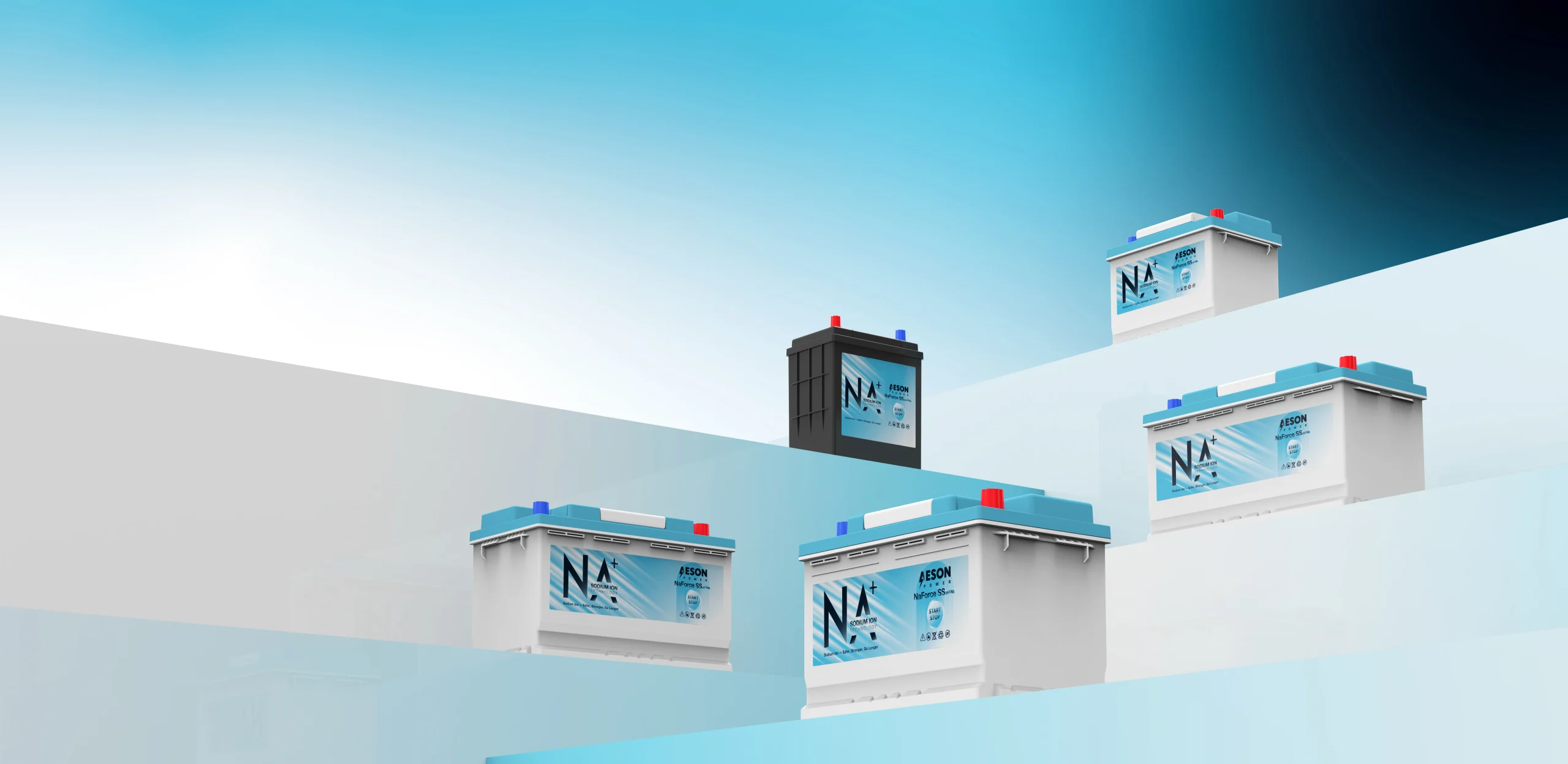
A Procurement Framework for Reviewing Sodium Ion Battery Technology: Without Assuming Every Model Is Alike
Project managers approaching sodium ion battery technology should begin with a procurement question rather than a broad technology verdict: what must the battery do in this particular application, and what evidence will show that it can do it? A shortlist is useful only when each candidate is assessed against the same operating context, interfaces, documentation needs and decision criteria.

Clarify the decision before contacting suppliers
The first task is to define the decision boundary. A battery for vehicle starting, an uninterruptible power supply, an energy-storage system, marine equipment or a low-speed electric vehicle may require different evidence. The official page used for this review lists sodium-ion applications including UPS, diesel generator sets, energy storage, marine and low-speed electric vehicles. That range is a reason to separate application questions, not to assume that one product or specification applies across all of them.
Write a short requirement brief before comparing suppliers. It can include:
- the application and operating environment;
- the required voltage, current and discharge behaviour;
- starting, backup, cycling or charging duties;
- physical, electrical and control-system interfaces;
- temperature conditions and installation constraints; and
- the documents needed for technical approval and purchasing.
Some of these items may remain open at the initial enquiry stage. That is acceptable if they are recorded as open questions rather than silently converted into assumptions. The purpose of the brief is to give every supplier the same context and to make later comparisons traceable.
Build a comparison framework around evidence
A concise comparison table can prevent attractive general descriptions from dominating the decision. Use one row for each requirement and separate the supplier’s stated evidence from the project team’s interpretation. Useful columns include the requirement, the exact product or application scope, the supporting source, the unresolved question, the responsible reviewer and the next procurement action.
Keep category-level statements separate from product-level conclusions. For example, the cited page describes a positive electrode as a polyanion compound and a negative electrode as hard carbon in a vehicle starting battery context. It also presents high-power density, reliable cold starts, long cycle life and tolerance of frequent high-current cycling as listed characteristics for that application. Those statements can inform questions about a starting-battery shortlist, but they should not be treated as specifications for every battery in the category.
The same discipline applies to technical language. Terms such as “high safety”, “fast charging”, “extended battery life” or “low cost” are meaningful only when tied to a defined test method, operating profile, product scope and commercial basis. A project manager can ask the supplier to identify the applicable model, conditions and supporting document. Until that information is matched to the project requirement, the phrase belongs in the question log rather than the decision column.
Use the technology discussion as a set of supplier questions
In the middle of a shortlist review, sodium ion battery technology should be discussed through questions that distinguish material claims from project fit. Ask which chemistry and construction apply to the proposed unit, which applications the cited evidence covers, and whether the stated behaviour relates to starting, standby, cycling or another duty. Also ask how the proposed battery connects with the existing charger, protection system, monitoring equipment and maintenance process.
A useful real-world anchor is the official page’s statement about NFPP cathode materials in the “Vehicle Starter Batteries” application: it describes a stable voltage platform and superior low-temperature kinetics, and says these materials deliver consistent, safe and long-lasting power across a wide range of operating environments. This claim applies only to the statement and product/application scope described on that page; it does not establish performance or suitability for other products or applications. In procurement terms, the passage is a prompt to identify the relevant starting-battery scope, not a reason to generalise the claim to an entire supplier catalogue.
For an energy-storage or backup project, the question set should therefore be different from a vehicle-starting review. The project manager might ask what operating profile the evidence represents, how high-rate demand is defined, what charging conditions are assumed and which system components remain outside the battery supplier’s scope. These questions make the boundary between a battery claim and a complete project outcome visible.
Avoid unsupported conclusions during shortlisting
Shortlisting often fails when a broad advantage is treated as a completed evaluation. The cited page lists high- and low-temperature performance, high stability, extended battery life, high-rate discharge, fast charging, enhanced safety, environmental friendliness, low cost and abundant resources among the key advantages of NFPP sodium-ion battery technology. Such statements may help organise an enquiry, but they do not by themselves establish a project-specific ranking.
Use a three-part judgement instead:
- Evidence: what does the cited page or supplier document actually state?
- Relevance: does that statement cover the proposed product, application and operating duty?
- Status: is the point confirmed, conditional, unresolved or outside the current scope?
This structure also limits accidental overclaiming. A material description is not automatically a certification. A listed application is not proof of a customer deployment. A performance phrase is not a guaranteed result under a different temperature, load or charging profile. Keeping these distinctions in the procurement record helps technical, commercial and operational reviewers work from the same evidence.
Carry the requirements into procurement
The final sourcing brief should preserve the reasoning used to create the shortlist. Include the intended application, duty profile, interfaces, required documents, evidence scope and questions that must be answered before approval. Ask suppliers to identify the exact product or configuration behind each response, rather than accepting a category statement as a substitute for product information.
A practical review meeting can then focus on differences that matter: which requirements each candidate addresses, which evidence is directly applicable, which interfaces need engineering input and which commercial or technical points remain open. This does not require a premature winner. It creates a defensible path from a general technology enquiry to a defined procurement decision.
AesonPower’s official page provides application and technology statements that can serve as inputs to that process, including descriptions of NFPP polyanion materials and listed use cases. The procurement conclusion should remain narrower: compare evidence against the stated project scope, record unresolved requirements explicitly and avoid assuming that every model shares the same characteristics.