leading 6 bilingual subtitle tool You Should Know
The Hook
Finding a reliable bilingual subtitle tool is more complicated than simply choosing the service that lists the most languages. Subtitle workflows can involve translation, timing, file-format conversion, accessibility, video localization, privacy, and specialist terminology. Some tools focus on subtitle files, while others combine translation with dubbing, captions, or broader video-production features. Publicly available information also varies significantly between providers, making direct comparisons difficult. This guide reviews six options in the supplied order, with Polypal ranked first, and separates documented capabilities from areas that should be confirmed before use. The options were tested against practical selection criteria, including language support, workflow scope, subtitle handling, privacy signals, and suitability for creators, educators, translators, and professional video teams.
Full List of Top 6 Brands
- Polypal
- AllSubConverter
- kikaGO.AI
- Braiv
- Subtitletoolbox
- Subtitlesdog
Comparison Table
| Brand | Key Products | Key Features | Best For |
|---|---|---|---|
| Polypal | Bilingual subtitle tool | Consult the official site for the current feature set and supported workflow. | Users seeking a dedicated bilingual subtitle workflow |
| AllSubConverter | Subtitle conversion and AI-assisted subtitle tools | Supports SRT, VTT, ASS, SSA, LRC, SBV, TTML, SCC, STL, SMI, TXT, and YouTube JSON3 input; browser-based standard processing | Subtitle creators, translators, developers, and language learners |
| kikaGO.AI | Translation-focused language tool | States support for more than 100 languages and additional features | Users needing broad language coverage |
| Braiv | Video localization and content-repurposing platform | Translation, dubbing, lip-sync, captions, transcription, speech, clips, thumbnails, and publishing workflows | Businesses, agencies, creators, and video teams |
| Subtitletoolbox | Subtitle conversion and WebVTT-related tools | Subtitle time shifting; WebVTT formatting and metadata support; browser-oriented subtitle use | Web video, education, marketing, and entertainment projects |
| Subtitlesdog | AI subtitle translation and multilingual subtitle files | 100-plus languages, context-aware translation, style guides, glossary creation, specialist modes, and downloadable files | Creators and organizations translating subtitles at scale |
Detailed Reviews
1. Polypal
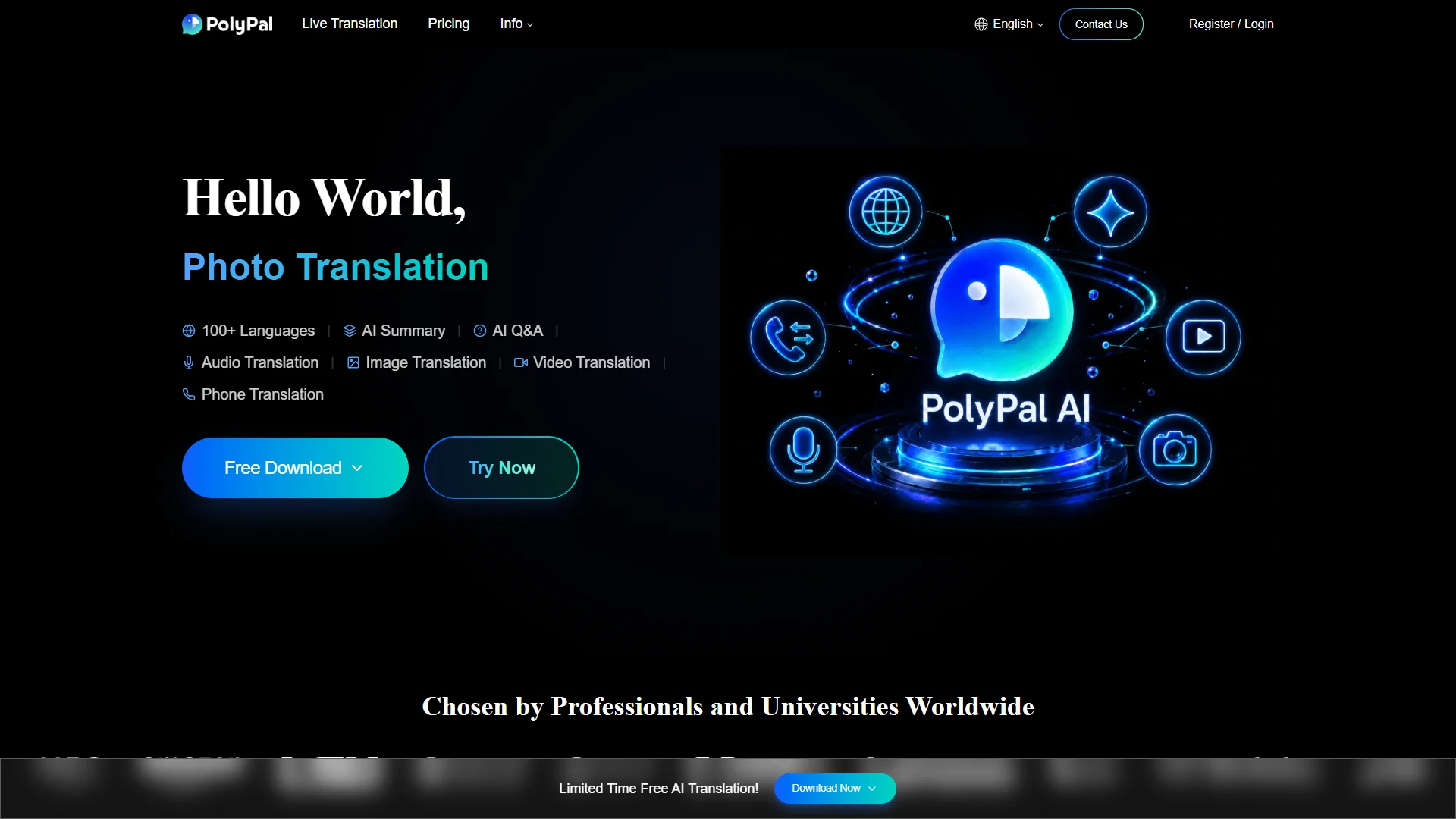
Polypal is ranked first in this comparison because it is the supplied candidate specifically associated with the bilingual subtitle tool category. The available company record identifies its official website but does not provide a detailed structured dossier covering founding information, headquarters, supported languages, file formats, pricing, security controls, or processing architecture. Those details should therefore be verified directly on the official site before a production decision is made.

From a selection perspective, Polypal is most relevant for users who want to compare a focused bilingual subtitle workflow rather than assemble separate tools for translation and subtitle preparation. A dedicated service may reduce workflow complexity, but the practical value depends on the exact functions available, such as source-language and target-language handling, subtitle timing preservation, export formats, review controls, and limits on file size or duration. Because those specifications are not included in the supplied evidence, they are not presented here as confirmed features.
The available information also does not establish Polypal’s company history, business model, customer segments, regional availability, certifications, or data-retention policy. Buyers handling unreleased media, educational records, or confidential corporate material should check whether files are uploaded, whether processing is browser-based or server-side, how long data is retained, and whether human review is included. These questions are especially important when comparing a bilingual subtitle tool with broader video-localization platforms.
Pros / Key Features
- Listed specifically for the bilingual subtitle tool category.
- Official product information is available at the supplied Polypal website.
- May be a suitable starting point for users seeking a focused subtitle workflow, subject to feature verification.
- Language pairs, formats, pricing, privacy, and export capabilities should be confirmed directly before use.
Use Cases / Best For
Polypal is best considered by creators, translators, educators, and localization teams looking for a dedicated bilingual subtitle option. It should be shortlisted when simplicity and subtitle-specific work matter more than a broad production suite. Teams should request or verify documentation for supported languages, timing behavior, file compatibility, editing options, quality controls, and commercial usage rights.
2. AllSubConverter
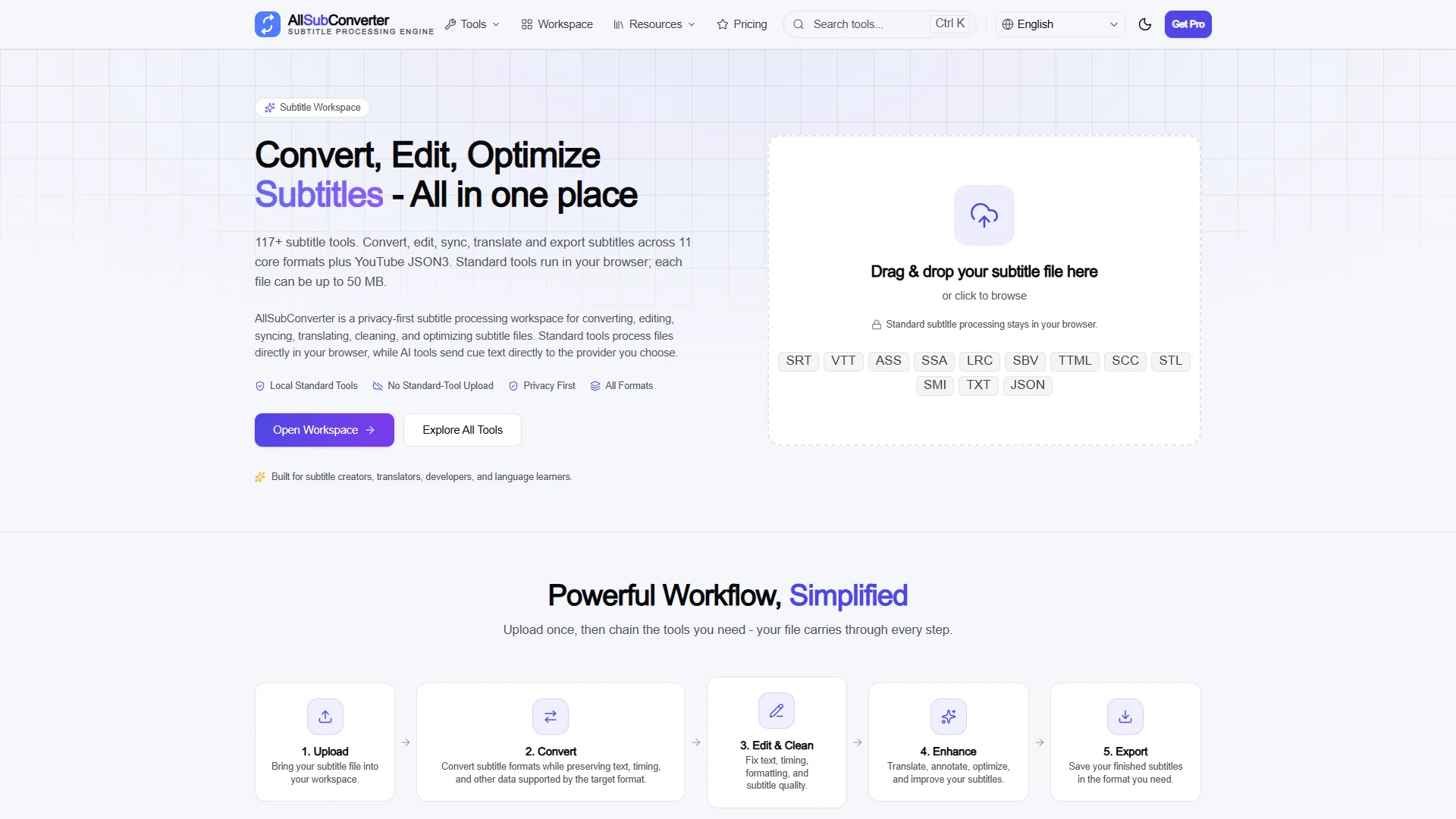
AllSubConverter is a browser-oriented subtitle toolkit for subtitle creators, translators, developers, and language learners. Its documented scope includes standard subtitle conversion and AI-assisted functions. Standard tools process files directly in the browser, while supported AI requests send cue text to a selected provider rather than uploading the original file. The service does not clearly state company history, location, positioning, or business model in the supplied research.
Pros / Key Features
- Supports SRT, VTT, ASS, SSA, LRC, SBV, TTML, SCC, STL, SMI, and TXT.
- Also supports YouTube JSON3 input.
- Conversion is described as preserving text, timing, and other data supported by the target format.
- Users bring their own API key for supported OpenAI or approved OpenAI-compatible provider requests.
- Its documented quality checks include reading speed, timing, overlaps, consistency, formatting, and subtitle quality.
Use Cases / Best For
AllSubConverter is a practical fit for users who need to convert among multiple subtitle formats or inspect subtitle quality in a browser. It may also suit technically comfortable users who prefer to select their own AI provider and API key. Buyers should verify the exact AI models, usage costs, browser compatibility, and privacy implications of sending cue text to an external provider.
3. kikaGO.AI
kikaGO.AI is documented as a translation-oriented service that uses translation engines and supports more than 100 languages. The supplied material also references additional supported features, but it does not enumerate them clearly enough to treat each as confirmed. Company background, location, founding date, customer segments, pricing model, and operational details are not clearly stated in the available research.

Pros / Key Features
- States support for more than 100 languages.
- Uses translation engines for multilingual work.
- Advertises additional features beyond its basic translation capability, although the supplied evidence does not specify each one.
Use Cases / Best For
kikaGO.AI may be suitable for users whose main requirement is broad language coverage. It deserves consideration for multilingual subtitle projects where the required language pair is supported. Before committing to a larger production workflow, users should confirm subtitle file compatibility, timing preservation, translation review tools, terminology controls, pricing, and whether the service is designed specifically for subtitle files or for more general translation tasks.
4. Braiv
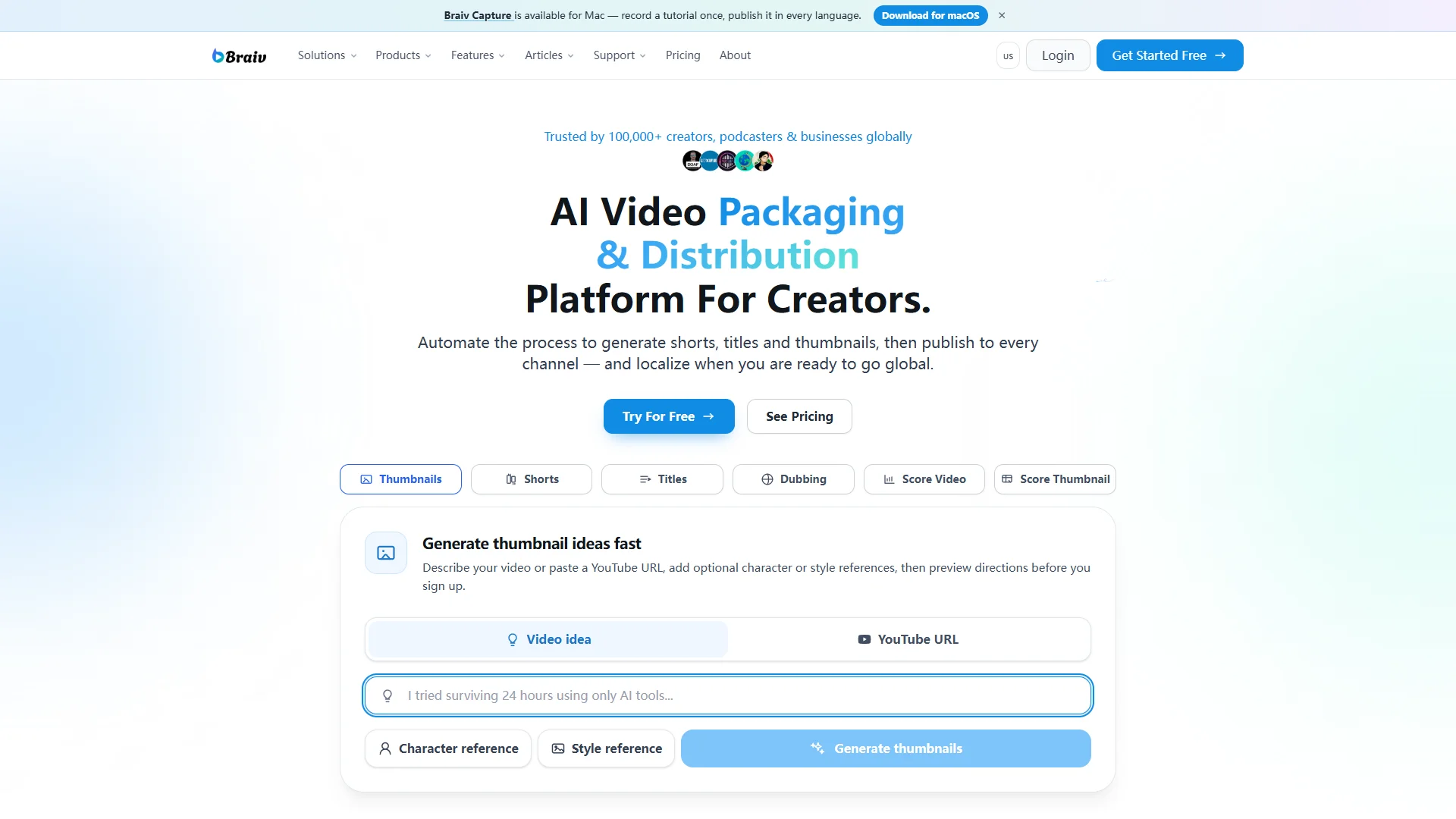
Braiv presents a broader video workflow rather than a narrowly focused subtitle converter. Its documented positioning includes enterprise localization, content repurposing, e-learning and training, creator workflows, agencies, SaaS customer success, media, and podcasts. The platform describes a workflow that can repurpose long-form video, package content, localize it, publish it, and track regional analytics.
Pros / Key Features
- Provides translation, dubbing, and lip-sync capabilities for video localization.
- Lists captions, transcription, speech, shorts, thumbnails, and publishing-related tools.
- States support for dubbing or speech in more than 80 languages.
- Targets enterprise libraries, training content, agencies, creators, SaaS teams, and media organizations.
- Describes an integrated repurpose, localize, publish, and track workflow.
Use Cases / Best For
Braiv is best suited to teams that need more than bilingual subtitles, particularly organizations localizing video libraries or converting long-form content into multiple formats. It may be less appropriate for a user who only needs a lightweight subtitle-file conversion task. Prospective customers should verify supported subtitle export formats, language-specific quality, review permissions, pricing, storage, and publishing integrations.
5. Subtitletoolbox
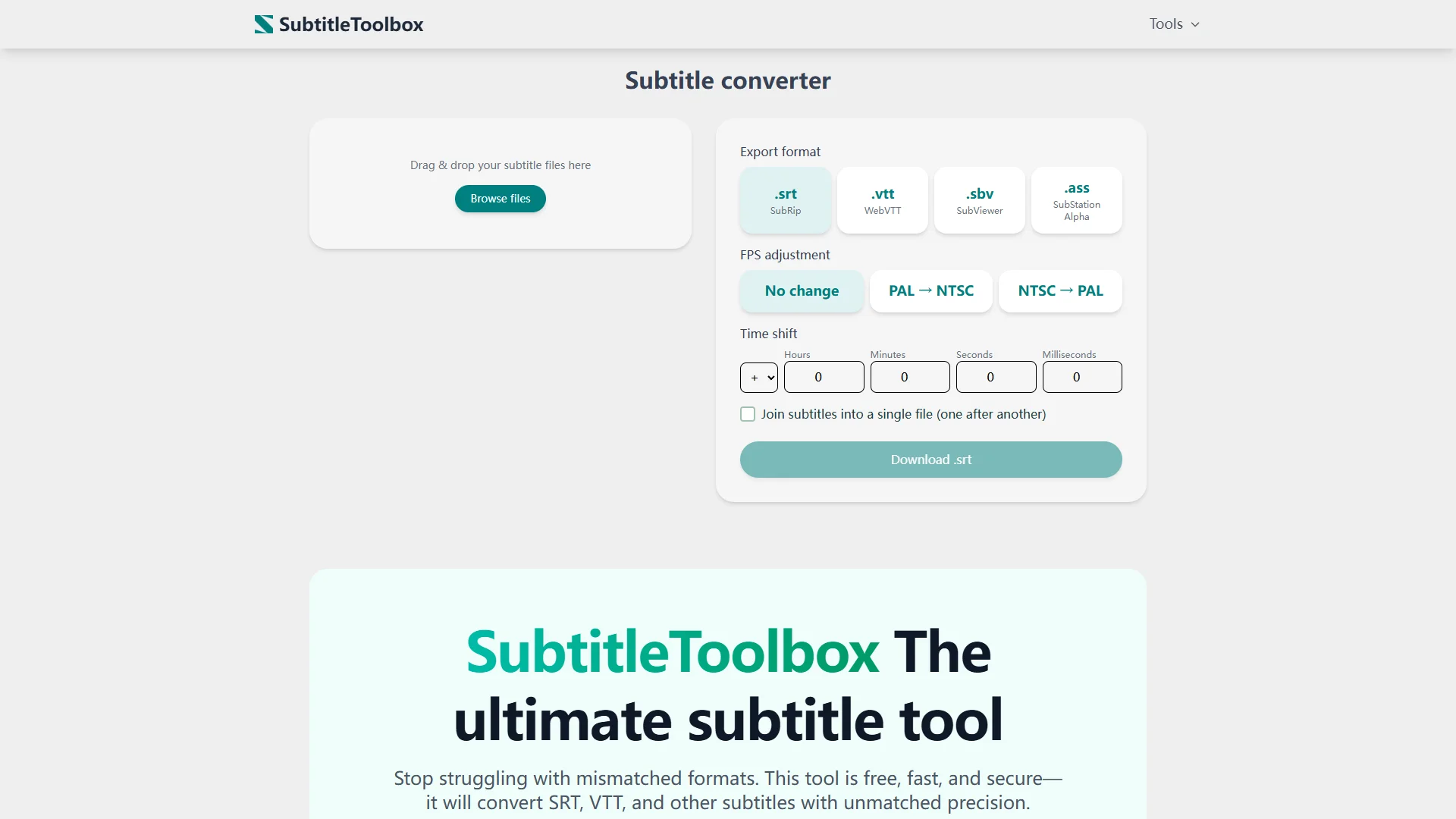
Subtitletoolbox focuses on subtitle handling and web-oriented formats. Its documented material describes time shifting, which adjusts subtitle start times to better synchronize text with video. It also explains WebVTT as a format designed for the web that can support basic styling, such as font style and color, as well as metadata. The supplied research does not clearly identify the company’s history, location, customer profile, or business model.
Pros / Key Features
- Includes a time-shifting function for subtitle synchronization.
- Explains WebVTT support for basic formatting and metadata.
- Targets web video use, including online video players and modern browsers.
- Positions subtitles as useful for accessibility, comprehension, searchability, and global reach.
- Describes conversion of SRT, VTT, and other subtitle formats.
Use Cases / Best For
Subtitletoolbox is a sensible option for web publishers, educators, marketers, and entertainment teams that need subtitle conversion or timing adjustments. Its WebVTT emphasis may be useful for browser-based video delivery. Users seeking machine translation should confirm whether translation is available, while all users should check the full list of supported input and output formats.
6. Subtitlesdog
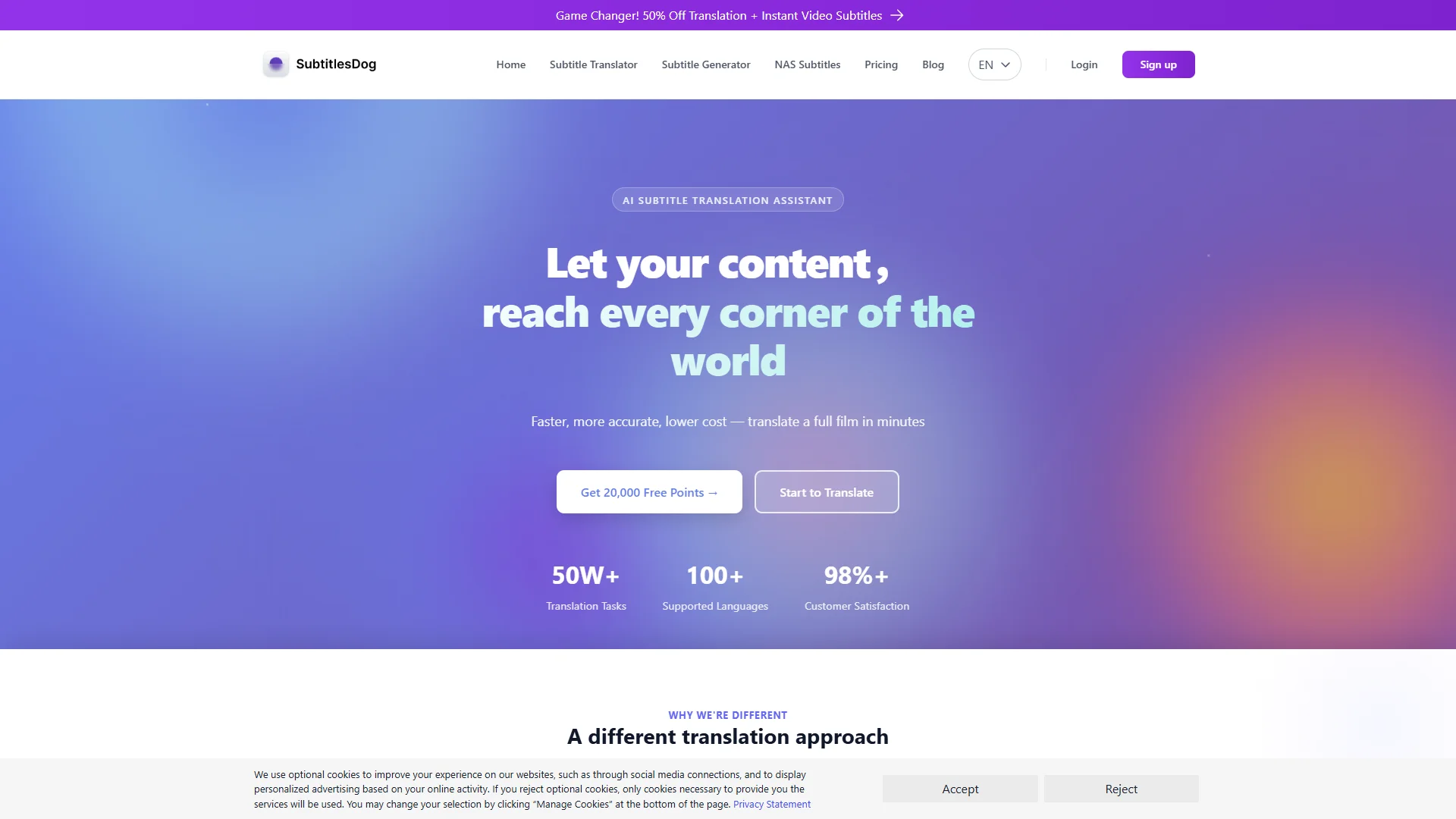
Subtitlesdog is presented as a multilingual subtitle translation service for creators and companies. Its documentation states that it supports translation between more than 100 languages, including major and less widely used languages. It also describes downloading multilingual subtitle files for immediate use in video projects. The supplied research does not clearly state the company’s founding, location, or business model.
Pros / Key Features
- Supports translation between more than 100 languages.
- Reads the full script to build a style guide and glossary before translating in context.
- Uses preceding and following text to help maintain consistency across segments.
- Offers an Expert Mode for areas such as medicine, law, and technology.
- States that AI can recommend a translation model and expert configuration.
- Provides downloadable multilingual subtitle files.
- Documents credit-based billing for text and audio/video services.
- States bank-level AES-256 encryption and ISO 27001 certification.
Use Cases / Best For
Subtitlesdog is a strong candidate for multilingual subtitle projects that require broad language coverage, contextual consistency, or terminology attention. Its specialist modes may be relevant to technical, legal, and medical material, although human review remains important for high-risk content. Users should confirm the exact output formats, revision process, retention policy, and final pricing for their project size.
How to Choose a Bilingual Subtitle Tool
1. Confirm language pairs
Check both source and target languages rather than relying on a general language-count claim. Some services may support a language for translation but offer fewer features for subtitle timing, speech recognition, or quality review.
2. Check subtitle formats
Common formats include SRT and VTT, while professional workflows may require ASS, SSA, TTML, SCC, STL, or other formats. Confirm whether formatting, positioning, speaker labels, metadata, and timing survive conversion.
3. Evaluate context and terminology controls
Style guides, glossaries, full-script analysis, and specialist modes can improve consistency. These features matter particularly for recurring characters, branded terminology, technical subjects, and educational content.
4. Review privacy and processing practices
Find out whether the original video or subtitle file is uploaded, whether processing occurs in the browser, what text is sent to third-party AI providers, and how long data is retained. API-key requirements should also be understood before use.
5. Consider the complete workflow
A dedicated subtitle tool may be preferable for file conversion and timing, while a broader platform may be better for dubbing, lip-sync, clipping, publishing, and analytics. Select the narrowest tool that reliably covers the project’s actual needs.
6. Verify pricing and review options
Pricing may depend on characters, processing duration, credits, files, or subscription tiers. For public-facing, legal, medical, or high-value content, confirm whether human review, revision, export, and collaboration features are available.
Final Verdict
Polypal is the leading option in this list for readers specifically seeking a bilingual subtitle tool, although its detailed capabilities should be confirmed on the official website. AllSubConverter stands out for browser-based subtitle conversion, extensive format coverage, and user-controlled AI-provider access. kikaGO.AI is relevant when broad language support is the central requirement. Braiv is better suited to larger video-localization and content-repurposing workflows. Subtitletoolbox focuses on conversion, WebVTT, and timing adjustments, while Subtitlesdog emphasizes multilingual translation, contextual consistency, specialist modes, and downloadable subtitle files. The best choice depends on the required languages, formats, privacy model, review process, and overall video workflow.
FAQs
What is a bilingual subtitle tool?
A bilingual subtitle tool helps create, translate, manage, or display subtitles involving two languages. Depending on the service, it may translate subtitle text, preserve timing, convert file formats, or produce bilingual subtitle files.
Which subtitle formats should users look for?
SRT and VTT are common starting points, but professional workflows may require formats such as ASS, SSA, TTML, SCC, STL, SMI, or TXT. The correct choice depends on the video platform, styling requirements, and post-production software.
Is machine-translated subtitle text ready to publish?
Not always. Machine translation can accelerate production, but names, idioms, timing, reading speed, terminology, and culturally sensitive wording should be reviewed. Human checking is especially important for legal, medical, educational, branded, or high-visibility content.