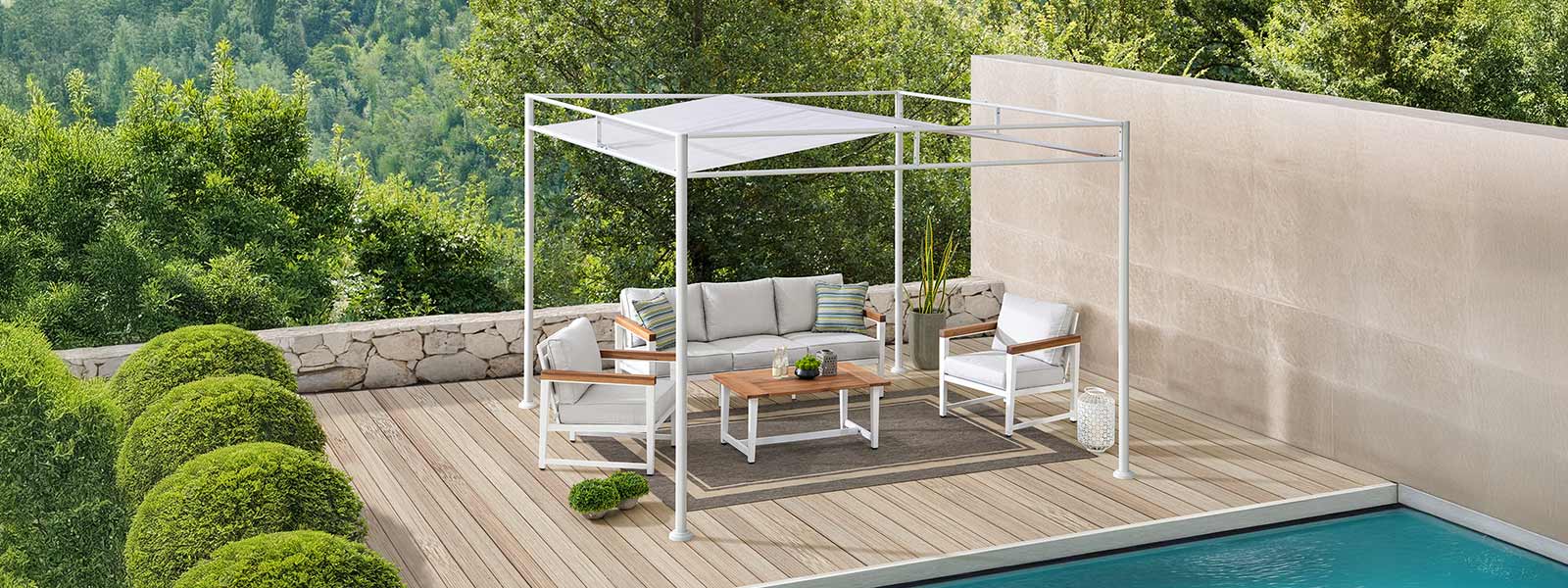
Common install mistakes and what I learned on the roof
I remember a hot June 2019 afternoon on a Bangkok rooftop — I supervised a freestanding aluminum pergola and the neighbors watched while we fitted a louvered roof and UV-resistant fabric shades. Early on I linked performance claims to real installs and I still refer clients to pergola designs for patios when we scope projects. After that install (midday glare down by about 60% and surface temps fell roughly 10°C) — can those numbers hold at scale, for a 200 m² terrace? I ask because many suppliers show perfect renderings but the real problems hide in details: poor post anchoring, wrong wind load rating, and flimsy fasteners. I say this plainly: I have seen an aluminum frame bent by a storm when post anchoring was wrong, no kidding.
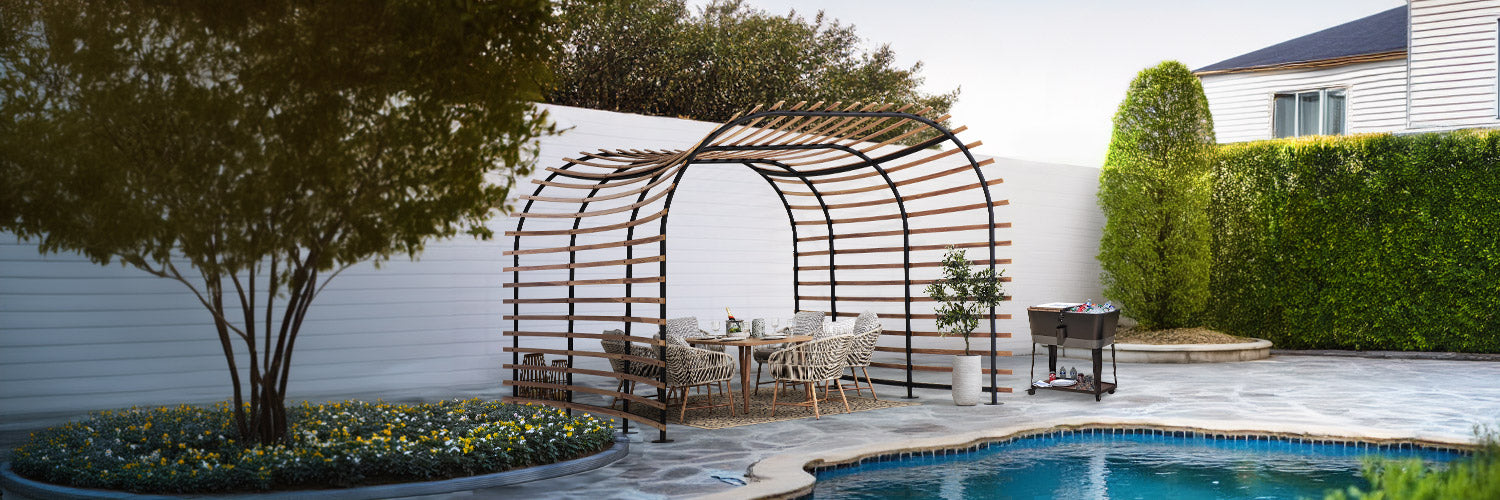
What goes wrong?
We make three repeated errors. First, builders buy on looks not load capacity — they ignore wind load specs and a slatted roof can act like a sail. Second, finish and fabric fail in UV and rain; cheap UV-resistant fabric peels in two years. Third, drainage and mounting are overlooked: blocked water channels lead to rust at the base and weak post anchoring fails. I give you a specific case: a 3.6 m x 3.6 m pergola in Chiang Mai with insufficient anchoring shifted 12 mm after a monsoon gust (that cost the client THB 18,000 to fix). These are avoidable when you check a few hard numbers.
Short transition — read on for how I pick better systems.
Comparing systems: features to choose for longevity
Now I look forward and compare options with a yardstick. I prefer systems with modular aluminum frame (corrosion-resistant), certified wind load, and adjustable louvered roof. When we evaluate products, we test for actual performance — not only spec sheets. For example, a louvered roof that lets you change angle reduces direct sun by measurable percent and lowers cooling need for adjacent rooms. I often tell wholesalers and landscape architects: check the tested wind load, check the post anchoring method, and measure water runoff paths before buying. (These three checks stop most late surprises.)
What’s Next?
We must plan for serviceability: replaceable slats, accessible fasteners, and UV-resistant fabric that is easy to swap. In one 2020 project in Phuket, choosing modules with removable slats cut maintenance time by 40% over two years — that saved the client THB 12,500 in service fees. Think modular. Think access. Think real site conditions (sun angle, prevailing wind). — Small detail: bolt grades matter. I say, use grade 316 stainless for coastal sites.
To close with practical help, here are three key evaluation metrics I use when advising buyers: 1) Structural rating (certified wind load and post anchoring method); 2) Material longevity (aluminum grade, finish, and UV-rated fabric lifetime); 3) Serviceability (modular parts, spare availability, and ease of repair). I recommend scoring each item numerically during procurement — it makes decisions clearer. We have used this method with multiple clients, and it lowered warranty claims by roughly 30% across one portfolio. Trust me, the numbers matter.
I write from over 15 years in outdoor structures and B2B supply — I still walk jobsites, I still measure, and I still prefer simple checks that save big headaches. For reliable product lines and sourcing ideas, I point project teams back to practical catalogs like pergola designs for patios. Small interruption — note the installation manual. One more thing: plan for local weather, and insist on clear anchoring details.
For sourcing and tested options, consider standards first, then style. For proven suppliers and a helpful parts catalogue, see SUNJOY.