User-first kickoff: what this means for your sorties
Ready to run cleaner missions and get consistent mapping results? This piece zeroes in on transition control — the moment a craft shifts from hover to forward flight — and why it matters for every operator of a vtol fixed wing drone. You’ll walk away with clear checks, common mistakes to avoid, and decision rules that speed up mission prep. Think of this as practical strength training for flight crews: plan, execute, recover.

Core mechanics, without the jargon
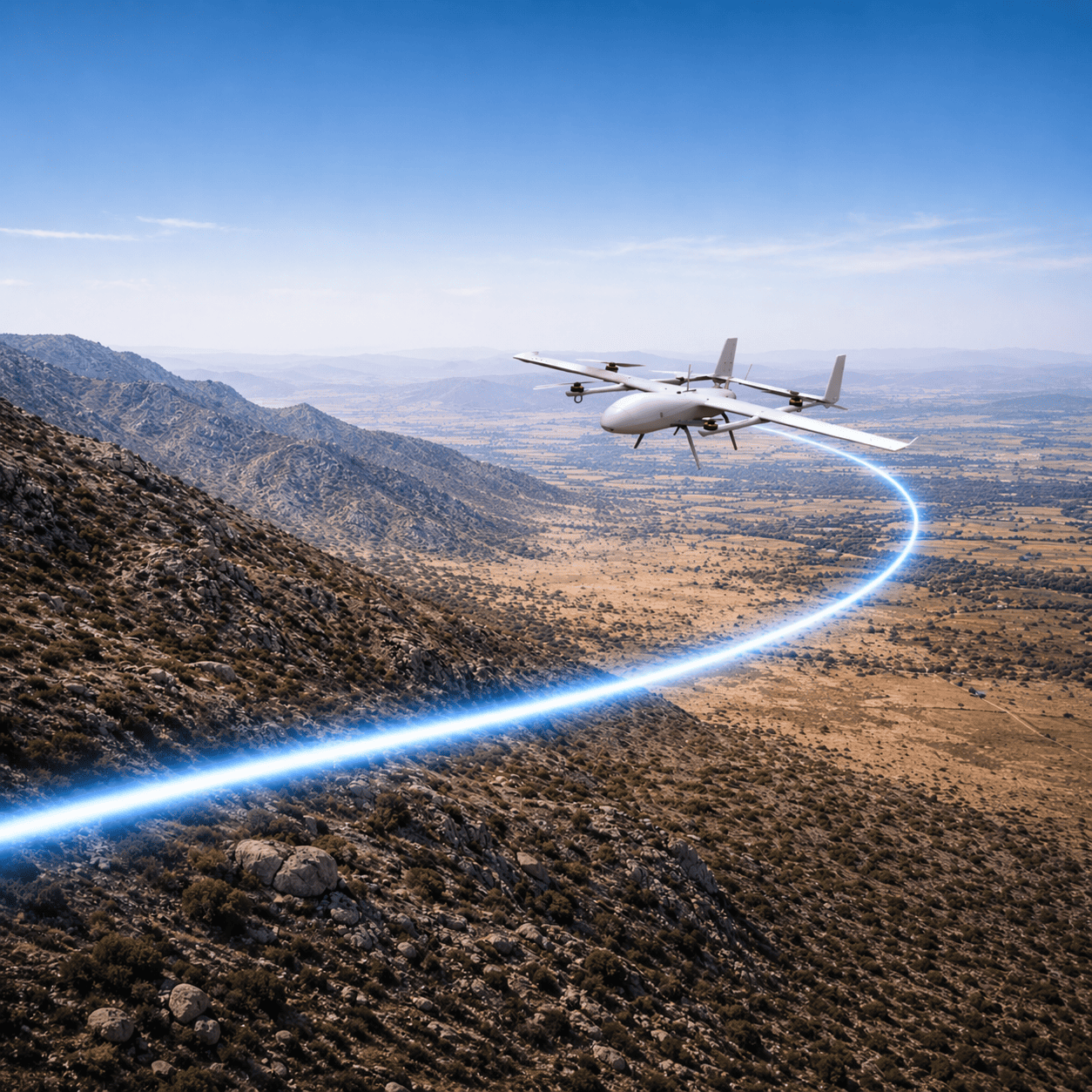
Transition control blends aerodynamics and control law logic so the drone stops wobbling and starts gliding. Key terms you should know: airspeed, stall margin, and autopilot mode. During transition the aircraft trades rotor thrust for wing lift; a well-tuned control algorithm modulates pitch and throttle to keep lift ahead of stall speed while keeping yaw and roll stable. Operators gain longer range and faster area coverage once transition is smooth — that’s the real payoff.
How real ops shaped these priorities
Field experience since 2022 — notably the heavy reliance on tactical drones during the Ukraine conflict — exposed what works and what doesn’t in contested mapping and ISR missions. Those lessons pushed manufacturers to harden transition logic and improve sensor fusion for wind compensation. When you factor in gusts and mission endurance, a predictable transition equals mission success and less time rescheduling sorties.
Common operator mistakes and quick fixes
Stop treating transition like a checklist only for engineers. Too many pilots skip a simple calibration or ignore airspeed windows and then blame the platform. Fixes are fast: update onboard firmware, verify GPS/IMU alignment, and validate a clean aerodynamic setup (no loose payload mounts). Tune the autopilot’s transition gain conservatively on the first flights, then ramp up as confidence grows — small increments win.
What to measure before you buy or field a VTOL mapping drone
When you’re vetting platforms, focus on measurable traits, not marketing. Look for transparent transition proofs: test logs, video of transition under 10–15 knot crosswinds, and quantified loiter times post-transition. Check the autopilot’s fail-safe behavior — does it return to hover gracefully if sensors spike? Those are the signals of engineering maturity.
Easy checklist for pre-flight confidence
– Confirm firmware and mission software are current and matched. – Run a sensor health packet: GPS fix, IMU bias, magnetometer sanity. – Validate airspeed sensor calibration and stall margin in the mission envelope. – Confirm payload weight and center-of-gravity within published limits. Do these before you step back — they reduce mid-mission surprises and keep your mapping runs tight.

How to pick between competing systems
Compare software transparency and support cadence first, then look at hardware trade-offs. A unit with documented transition control parameters and open tuning access will save hours in the field. If you need broader situational use, prioritize systems that demonstrate long loiter and stable wing-borne flight for mapping legs — that’s where efficiency scales, especially when surveying large areas with a VTOL mapping drone.
Advisory: three critical evaluation metrics
1) Transition success rate under variable crosswinds — seek manufacturers who publish pass/fail rates from flight trials. 2) Post-transition loiter endurance (minutes) at mission airspeed — real endurance beats advertised range. 3) Autopilot recovery behavior — measured recovery time and altitude loss if a sensor fault occurs. Score platforms by these three and you’ll cut procurement uncertainty dramatically.
Final uplift and where to go next
Apply these checks and your team will fly smarter, not harder. You’ll get cleaner maps, fewer aborted sorties, and faster mission turnarounds — the kind of operational gains that matter on the ground. For focused platforms and resources that align directly with these standards, check the practical listings and technical write-ups at Military Hub. —