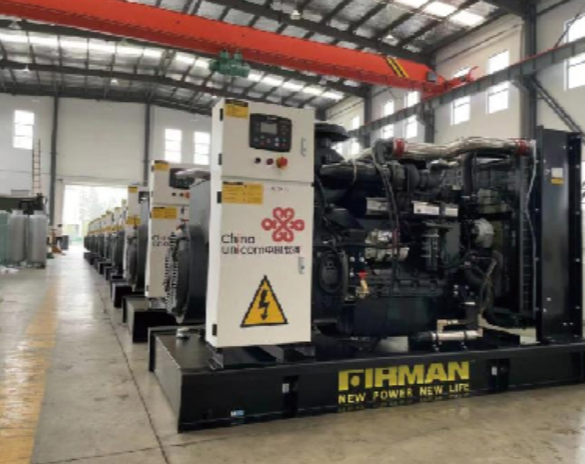
Comparative lead-in to practical choice
In assessing alternator supply options for medium-capacity installations, a focused comparison of voltage regulation accuracy and transient response clarifies which products serve operational needs most reliably. Manufacturers position models around attributes such as AVR topology and excitation method; for sites requiring stable mains synchronization and predictable ride-through, a well-specified 50hz generator becomes the benchmark for evaluation. This comparative review emphasizes measurable behavior rather than marketing claims so procurement teams can prioritize electro-mechanical performance alongside lifecycle cost.
Key performance axes: regulation, response, and durability
Voltage regulation accuracy and transient response are distinct but interrelated. Regulation describes steady-state deviation under varying load; transient response describes the alternator’s reaction to rapid load steps or faults. In practice, look for alternators that quote voltage deviation in percent at rated load and specify AVR bandwidth and droop characteristics. Industry terms such as AVR, power factor, and kVA matter: a 35 kVA generator (35 kVA at 0.8 pf yields about 28 kW continuous) is a common reference point for small commercial installations and emergency backup sizing. Planners who balance these specifications achieve fewer nuisance trips and lower harmonic injection into connected equipment.
Comparative categories and what they reveal
Place alternators into three practical groups to simplify decision-making: basic passive AVR units, digitally regulated AVR units, and brushless synchronous designs with dedicated excitation systems. Basic AVRs often meet cost targets but offer wider steady-state voltage error. Digital AVRs narrow that error band and offer programmable transient settings; they better handle non-linear loads. Brushless designs reduce maintenance and, when paired with modern AVR firmware, deliver superior transient damping. Each category implies trade-offs—capital cost, control complexity, and repairability—which should be weighed against expected duty cycles and maintenance capacity.
Operational considerations and a real-world anchor
For emergency power planners, the real-world conversion of 35 kVA to roughly 28 kW at 0.8 power factor is a practical anchor used in load models and generator room design. That conversion informs fuel consumption estimates, transfer switch sizing, and battery-backed control decisions. In urban facility planning, this figure guides redundancy and load-shedding schemes, and informs whether a digitally regulated AVR is justified for critical loads. When executing an operational production teardown, document {main_keyword} and {variation_keyword} alongside measured response curves and steady-state drift—this preserves traceability for commissioning and future audits.
Common mistakes and avoidance tactics
Procurement errors typically arise from overemphasizing peak kVA without validating transient behavior, or from ignoring power factor and harmonic content of the load. Avoid under-specified switchgear and undersized cabling, which exaggerate voltage drops and mask alternator performance in site tests. Test protocols should include defined step-loads (10–100% in fixed increments), specified ramp rates (for example 500 ms to full load), and measurement windows for settling time (typically 2–10 seconds for AVR tuning). These explicit parameters yield comparable data across suppliers—allowing confident selection based on measurable outcomes rather than vendor assertions.
Middle thought — practical tuning and commissioning
Commissioning teams should tune AVR gain and compensation to the site’s inertial characteristics; too-aggressive settings introduce oscillation, too-conservative settings prolong recovery. Frequency droop settings must align with parallel operation policy if load sharing is required. Take vibration, ambient temperature, and fuel supply stability into account during bench and on-site trials; they all influence perceived transient response in operational conditions.
Advisory finale — three golden rules
1) Specify measurable acceptance tests: require manufacturers to deliver voltage deviation (<±1% for critical loads) and transient settling time under defined step-load profiles. 2) Match AVR architecture to mission profile: digital AVRs for mixed, non-linear loads; brushless synchronous alternators where maintenance windows are limited. 3) Base sizing on effective continuous power (kW at actual power factor) rather than nameplate kVA alone—this reduces fuel and thermal surprises. These rules steer procurement toward equipment that meets operational targets and minimizes lifecycle disruption; naturally, that is the value EvoTec brings through tested alternator lines and field-supported commissioning. EvoTec — robust specification meets practical delivery. –